
Dry eyes after 50: why it happens and what actually relieves it
After 50 Strong checked the dry eye evidence for this guide. Dry eyes are one of the most common complaints after 50, and the cause is usually mechanical rather than mysterious: the oil glands in the eyelids age and clog, the tear film loses its oil lid, and tears evaporate within seconds. The good news is that the most effective tools are cheap, unglamorous and proven. The honest boundary matters just as much: supplements, including omega-3 at the dose of the largest trial, have failed their best test. Here is the full relief ladder, and the warning signs that mean an eye doctor, not another bottle of drops.
- Usual cause: meibomian gland dysfunction, the oil glands of the eyelids aging and clogging, behind most chronic dry eye after 50.
- First-line relief: artificial tears on a schedule, plus daily warm compresses and lid cleaning for the oil layer.
- Supplement verdict: DREAM, 535 people, 3,000 mg omega-3 daily, found no benefit over placebo. Supplements are not a dry eye treatment.
- See a doctor for: dryness plus dry mouth and joint pain, which can signal Sjogren’s syndrome, or any eye pain, light sensitivity or vision change.
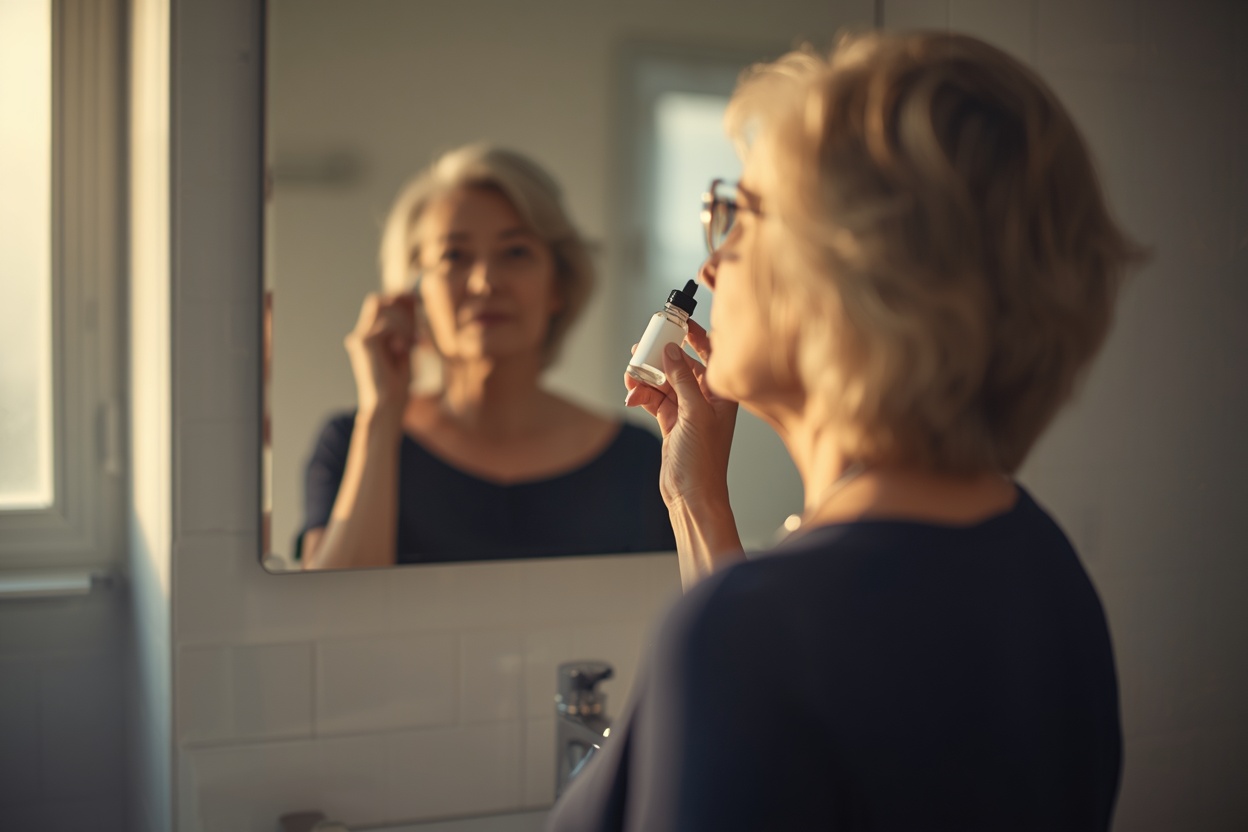
Why eyes dry out with age
Your tear film is a sandwich: a watery layer on the eye, an oil layer on top that slows evaporation, and a mucin base that spreads it evenly. Aging attacks two parts of the sandwich at once. The meibomian glands along the eyelid rims, which secrete the oil, become blocked and produce poorer-quality oil with age; when that happens the water layer evaporates within seconds, and the surface dries, stings and reddens no matter how much watery fluid remains underneath. This gland dysfunction is the leading driver of chronic dry eye in older adults. At the same time, tear production itself declines as the lacrimal system ages, and hormonal shifts around menopause reduce both tear volume and oil quality further.
Modern life stacks accelerators on top of the biology: hours of screen work with blink rates that drop to a third of normal, dry heated or air-conditioned rooms, wind, and medications that dry secretions throughout the body, including antihistamines, some antidepressants, blood-pressure drugs and diuretics. Add contact lens wear, diabetes, thyroid eye disease and previous eye surgery, and the list of contributors gets long. The practical point: dry eye after 50 is rarely one cause, and the relief that lasts starts with finding which layer of your film is failing.
The relief ladder, in order of evidence
Step 1: artificial tears, on a schedule. The foundation, used several times a day whether or not you feel symptoms at that moment. Occasional use: any well-formulated drop. More than four times a day: preservative-free single-use vials, because preservatives irritate with heavy use. Gels and ointments blur vision and belong at bedtime.
Step 2: warm compresses and lid hygiene. If drops slide off the problem within minutes, your oil layer is the failure point, and this is the fix. Warm compress over closed lids for five to ten minutes, once or twice daily, softens the oil; gentle lid massage and cleaning express it. Done daily, this outperforms every supplement ever tested for dry eye.
Step 3: environment and blinking. A humidifier in dry rooms, screens positioned below eye level so you blink fully, deliberate complete blinks during device time, and timed breaks. These cost nothing and carry genuine evidence.
Step 4: prescription tools for persistent disease. Cyclosporine and lifitegrast drops address the surface inflammation that sustains chronic dry eye, and punctal plugs keep your own tears on the eye longer. These are clinician decisions, made after an examination shows which layer is failing.
What supplements can and cannot do
The straight answer: supplements cannot treat dry eye, and the best evidence says so plainly. The DREAM trial randomized 535 people with moderate to severe dry eye to 3,000 mg of omega-3 daily or olive oil placebo for 12 months; symptoms improved equally in both groups, with no significant difference. The American Academy of Ophthalmology states the evidence is insufficient to recommend any omega-3 formulation. The full analysis lives in our omega-3 and dry eyes guide, including the extension trial showing no rebound after stopping.
What remains is preliminary: small trials of astaxanthin at 4 to 12 mg report symptom improvements in eye-strain contexts, and small studies of various nutrients echo the pattern. Nothing approaches the evidence behind a five-minute warm compress. If a dry eye supplement arrives in your feed, the correct response is to spend the money on a humidifier and a pack of preservative-free tears, and to bring the persistent case to an eye doctor who can measure which layer of your tear film is actually failing.
Frequently Asked Questions
Why do eyes get drier after 50?
Three age shifts converge. The oil glands along the eyelids, the meibomian glands, clog and thin with age, and when the tear film loses its oil layer it evaporates within seconds instead of minutes; this gland dysfunction sits behind most chronic dry eye in older adults. Tear production itself declines as the lacrimal system ages. And hormonal shifts, especially around menopause, change both the tears and the glands that make them. Add the modern accelerators, hours of screen time with reduced blinking, dry indoor air, and medications like antihistamines, antidepressants and blood-pressure drugs that dry secretions, and dryness becomes one of the most common complaints eye doctors hear from people over 50.
What drops actually work for dry eyes?
Artificial tears are the foundation, and how you use them matters more than which brand. Use them on a schedule, several times a day, rather than only when burning starts. For occasional use any well-formulated drop works; for use more than four times a day, choose preservative-free single-use vials, since preservatives themselves irritate with heavy use. If drops slide off the problem within minutes, the issue is more likely the oil layer than the water layer, which is a job for warm compresses and lid hygiene, not a different bottle. Gels and ointments blur vision and belong at bedtime.
Do supplements help dry eyes?
The honest answer from the largest trial: no. The DREAM study randomized 535 people with moderate to severe dry eye to 3,000 mg of omega-3 daily or an olive oil placebo for 12 months. Symptoms improved in both groups, with no significant difference, and the American Academy of Ophthalmology states the evidence is insufficient to recommend omega-3 for dry eye. Smaller trials of other nutrients, including astaxanthin at 4 to 12 mg, are preliminary. Supplements are not a dry eye treatment. The tools with real evidence are drops, warm compresses and lid hygiene, environment and blinking habits, and prescription anti-inflammatory drops for persistent disease.
Is dry eye a sign of something serious?
Usually it is a chronic nuisance, not an emergency, but two patterns deserve real attention. The first is dryness that arrives together with a dry mouth, dental problems from it, joint pain or fatigue, which can signal Sjogren’s syndrome, an autoimmune condition that attacks moisture-producing glands; that combination belongs with a doctor, often a rheumatologist, and there are effective treatments. The second is any dry eye story that includes significant eye pain, light sensitivity or vision change, which can indicate something other than ordinary dry eye and needs prompt examination. Ordinary burning and grittiness that fluctuates with the day and the environment is the common, manageable form.
When should I see an eye doctor for dry eyes?
Book a visit if four to six weeks of consistent home care, regular tears, warm compresses and environment fixes, have not clearly improved things. Also book promptly for the warning patterns: eye pain beyond ordinary irritation, light sensitivity, redness that does not settle, discharge, vision changes, or dryness paired with a dry mouth. An eye doctor can measure whether your problem is water-layer shortage or oil-layer failure, check for gland blockage, screen for autoimmune causes and reach the prescription tools, anti-inflammatory drops and punctal plugs, that home care cannot. Chronic dry eye is managed, not cured, and management works best when it matches the actual cause.
Can dry eye be cured?
Chronic dry eye is managed rather than cured, and that is a practical truth rather than bad news. The age-related gland changes behind most cases persist, but their effects respond well to routine: daily warm compresses and lid cleaning, scheduled tears, humidified air and blinking discipline keep most people comfortable indefinitely. Flares follow seasons, screens and medications, and adjusting the routine handles them. Prescription drops and punctal plugs cover the cases that outlast routine care. The realistic goal is comfortable, functional eyes on an ordinary day, and that goal is achievable for the large majority of people who match the treatment to the cause.