
Neuro Salt ingredients: every botanical checked against the research
After 50 Strong checked the published research for this guide. Neuro Salt is one of the most-advertised nerve supplements of 2026, carried by a viral “pink salt trick” campaign. Behind the hook is a five-botanical capsule formula. Credit where due: unlike many rivals, Neuro Salt discloses every dose on the label. That transparency lets us do what we do here: check each ingredient against the published human research, dose by dose. The results are illuminating, and not in the direction the ads suggest.
- Label transparency: five botanicals with disclosed amounts per two-capsule serving. No proprietary blend.
- Key finding: none of the five ingredients has a human trial for peripheral neuropathy. The formula contains zero alpha-lipoic acid, benfotiamine, B12, or acetyl-L-carnitine.
- Dose mismatch: passionflower 145 mg vs 45 drops/day of extract in anxiety trials (Akhondzadeh et al., J Clin Pharm Ther, 2001). Corydalis 100 mg powder vs 75 mg isolated alkaloid in traditional references.
- Safety note: corydalis carries rare but documented liver injury risk. Three botanicals have additive sedative effects.
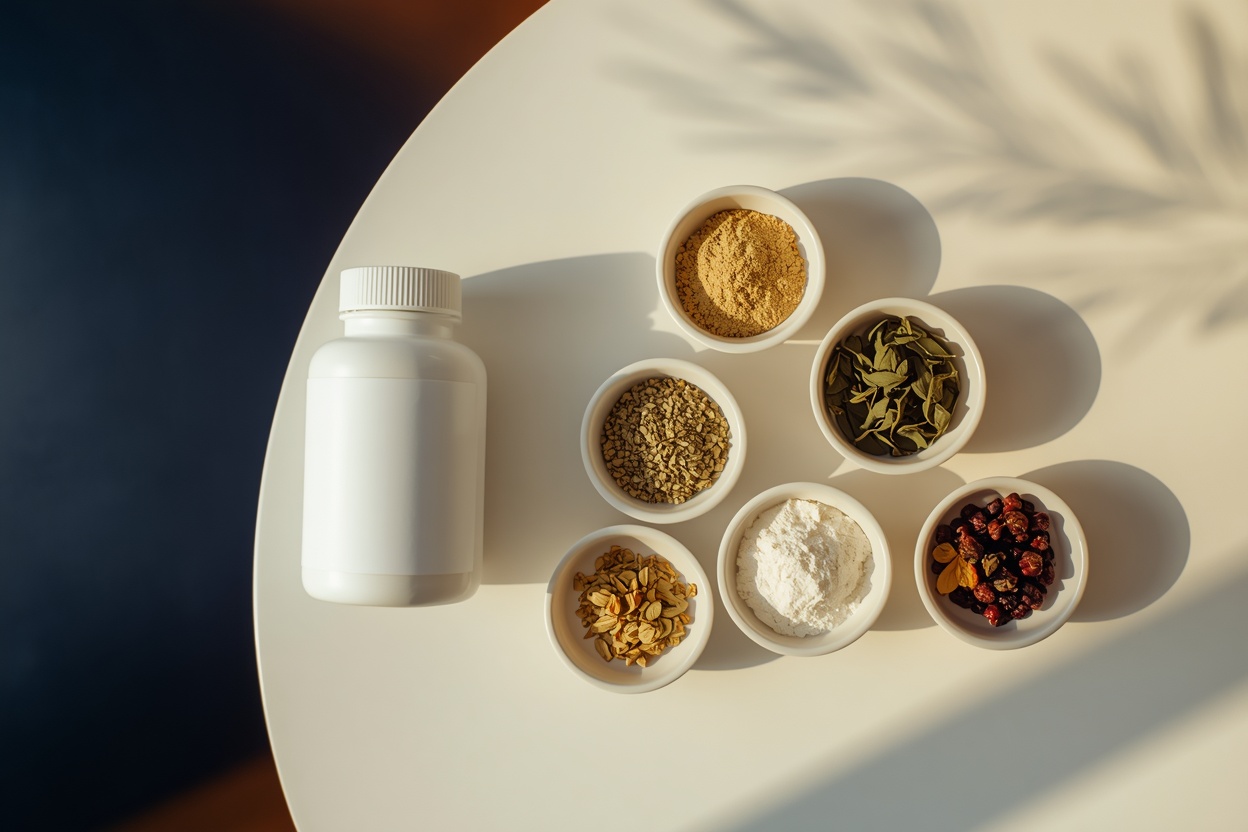
What is on the label
Per two-capsule daily serving, according to the product’s Supplement Facts:
| Ingredient | Amount | What human research actually studied |
|---|---|---|
| Passionflower (Passiflora incarnata) | 145 mg | Anxiety and sleep trials, not nerve pain |
| Marshmallow root (Althaea officinalis) | 110 mg | Throat and digestive soothing; no nerve research |
| Corydalis powder (Corydalis yanhusuo) | 100 mg | Animal pain studies; human references use far more |
| Prickly pear extract (Opuntia), 20:1 | 50 mg | Antioxidant research; no neuropathy trials |
| California poppy seed (Eschscholzia californica) | 45 mg | Traditional sedative use; no modern human trials |
One bottle holds 60 capsules, a 30-day supply. There is no salt in the formula, pink or otherwise. The “pink salt trick” is an advertising phrase, not an ingredient or a protocol; it appears in no medical literature.
Ingredient by ingredient against the evidence
Passionflower, 145 mg: real human trials, wrong condition, low dose
Passionflower is the strongest ingredient on this label, and it still misses the mark for neuropathy. Its human trial record covers anxiety: Akhondzadeh et al. randomized 36 patients with generalized anxiety disorder to passionflower extract (45 drops per day) or the benzodiazepine oxazepam (30 mg twice daily) over four weeks. The passionflower group showed comparable anxiety reduction with fewer work-impairment side effects. Source: Akhondzadeh et al., J Clin Pharm Ther, 2001.
Two problems for nerve buyers. First, the condition mismatch: calming anxiety is not treating damaged nerves, and no published trial has tested passionflower for neuropathy symptoms. Second, the dose: the human trials used a standardized liquid extract at 45 drops per day, while Neuro Salt provides 145 mg of plain herb. The two forms are not directly comparable, but the studied amount sits well above what two capsules deliver.
Corydalis, 100 mg: promising mice, absent humans, real cautions
Corydalis is the component the marketing leans on hardest, via a 2016 PLOS ONE study from UC Irvine. Read carefully what that study was: mice, in three pain models including a neuropathic one, where corydalis extract at 200 mg/kg reduced pain behavior without the tolerance that develops with morphine. Genuinely interesting preclinical work. It has never been followed by a human neuropathy trial. Source: Wang et al., PLOS ONE, 2016.
The dose math is stark. Traditional references cite 75 mg daily of tetrahydropalmatine, the isolated active alkaloid, or 5-10 grams of the crude herb. Neuro Salt’s 100 mg of powder contains THP only as a minor fraction of the whole root, landing orders of magnitude below either reference point.
Corydalis also carries the label’s one serious safety flag. Its alkaloid tetrahydropalmatine has been implicated in rare liver injury: Engman et al. documented corydalis-induced hepatitis with enzyme levels that rose on re-exposure in two patients, and the CDC traced a cluster of acute hepatitis cases to a THP-containing product sold as Jin Bu Huan. Rare is not never, and anyone with liver disease or regular alcohol use should bring this ingredient to a doctor before trying the formula. Source: Engman et al., ACG Case Rep J, 2023; CDC, MMWR Morb Mortal Wkly Rep, 1993.
Marshmallow root, 110 mg: the wrong tissue entirely
Marshmallow root is a demulcent: its mucilage coats and soothes irritated membranes, which is why its research and traditional use center on sore throats, coughs, and digestive lining. Published literature offers no human nerve studies to examine. As nerve support, this is filler with a pleasant herbal reputation.
Prickly pear extract, 50 mg (20:1): antioxidants, but not for nerves
Prickly pear is rich in betalains, antioxidant pigments with genuine research interest, and the 20:1 concentration means 50 mg represents about a gram of raw material. The human trials that exist study hangovers (Wiese et al., 2004) and blood sugar markers (Frati et al.). None studied neuropathy. Oxidative stress does play a role in diabetic nerve damage, which is the marketing bridge here, but “antioxidant in other contexts” has never translated automatically into nerve benefit.
California poppy seed, 45 mg: traditional sedative, thinnest file
California poppy contains no opiates despite the name, and its calming alkaloids earned it a place in European herbal pharmacopoeias as a mild sedative. Its human clinical trial file for nerve-related outcomes is effectively empty. At 45 mg, the smallest dose on the label, its role is a supporting calmative alongside passionflower. Source: EMA European Union herbal monograph, Eschscholziae herba.
What the label leaves out
Three absences matter more than any presence:
- Every ingredient with human neuropathy trials. Alpha-lipoic acid (SYDNEY 2: 62% improved versus 26% on placebo, Ziegler et al., Diabetes Care, 2006), benfotiamine, B12 for confirmed deficiency, and acetyl-L-carnitine all have human data, however mixed. Neuro Salt includes none of them. Our neuropathy supplements guide ranks that evidence.
- A finished-formula trial. The combined five-ingredient product has never been studied in people. Ingredient-level findings, already thin here, do not automatically transfer to a blend.
- A public certificate of analysis. No third-party potency or purity testing is published on the product page as of this writing, so the disclosed doses cannot be independently verified.
The bottom line on this label
Neuro Salt deserves credit for disclosing its doses, a transparency its competitors often skip. What the disclosed doses reveal is a calming botanical blend, marketed to neuropathy searchers, containing no ingredient with a human neuropathy trial, at amounts below even the anxiety research behind its best-studied component. If your goal is calm and sleep support, that is what this formula is built for. If your goal is nerve symptom relief backed by human trials, start with the ingredients in our alpha-lipoic acid guide and benfotiamine guide, rule out deficiency with our B12 guide, and browse the Nerve Health hub for the full map.
Frequently Asked Questions
What ingredients are in Neuro Salt?
Per two-capsule serving, the label lists five botanicals with disclosed amounts: passionflower 145 mg, marshmallow root 110 mg, corydalis powder 100 mg, prickly pear 20:1 extract 50 mg, and California poppy seed 45 mg. A bottle contains 60 capsules, a 30-day supply. The formula contains no salt; the ‘pink salt trick’ phrase comes from its advertising, not its contents.
Do Neuro Salt ingredients have human trials for neuropathy?
No. None of the five botanicals has a published human trial for peripheral neuropathy, and the finished formula has never been clinically studied. Passionflower has small human trials for anxiety, and corydalis has animal studies in pain models, including a 2016 PLOS ONE study in mice (Wang et al., PLOS ONE, 2016). The four ingredients with actual human neuropathy trials – alpha-lipoic acid, benfotiamine, B12, and acetyl-L-carnitine – are all absent from the formula.
Are Neuro Salt doses strong enough to match the research?
By the research that exists, no. Human anxiety trials of passionflower used a standardized extract at doses far above 145 mg of plain herb; Akhondzadeh et al. used 45 drops per day of a liquid extract in a 36-patient trial. Corydalis human references cite 75 mg daily of the isolated active alkaloid tetrahydropalmatine or 5-10 grams of crude herb in traditional use; the label provides 100 mg of powder, containing a small fraction of that alkaloid. The other three botanicals lack human nerve studies to dose-match against at all.
Are there safety concerns with Neuro Salt ingredients?
Two deserve attention. Corydalis and its alkaloid tetrahydropalmatine are linked to rare but documented liver injury, including published case reports with positive rechallenge (Engman et al., ACG Case Rep J, 2023) and a CDC-documented cluster of hepatitis cases from a related THP-containing product (CDC, MMWR Morb Mortal Wkly Rep, 1993). Anyone with liver disease or regular alcohol use should discuss it with a doctor. Passionflower, California poppy, and corydalis all have calming properties that can add up with sedative medications, sleep aids, or alcohol.
What is the pink salt trick and does it involve actual salt?
It is a marketing phrase from Neuro Salt’s advertising campaigns, not a clinical term, and it appears in no peer-reviewed research. The formula contains no salt of any color. The ads use the phrase as a curiosity hook that leads to the product page; the actual product is a five-botanical calming formula in capsules.
Neuro Salt Ingredients – Full Breakdown
After 50 Strong does not sell supplements. We publish plain-English facts for readers over 50.
Explore Nerve Health