
Does Dentavive work for oral health? Our 2026 review
After 50 Strong checked the Dentavive label against published human trials. The product is a chewable oral probiotic with five bacterial strains. The strains have real ingredient-level evidence. The finished formula has never been clinically tested. The guarantee terms conflict between pages. Our score: 3 out of 5.
- Verdict: 3 out of 5. Defensible strains. No finished-product trial. Conflicting guarantee terms.
- Price: 1.63 to 2.30 dollars per day. Verify at checkout.
- Key strain: L. reuteri has the deepest oral health research base. Mixed RCT results.
- Delivery: chewable tablet. Dissolves in the mouth. One per day.
What Dentavive is
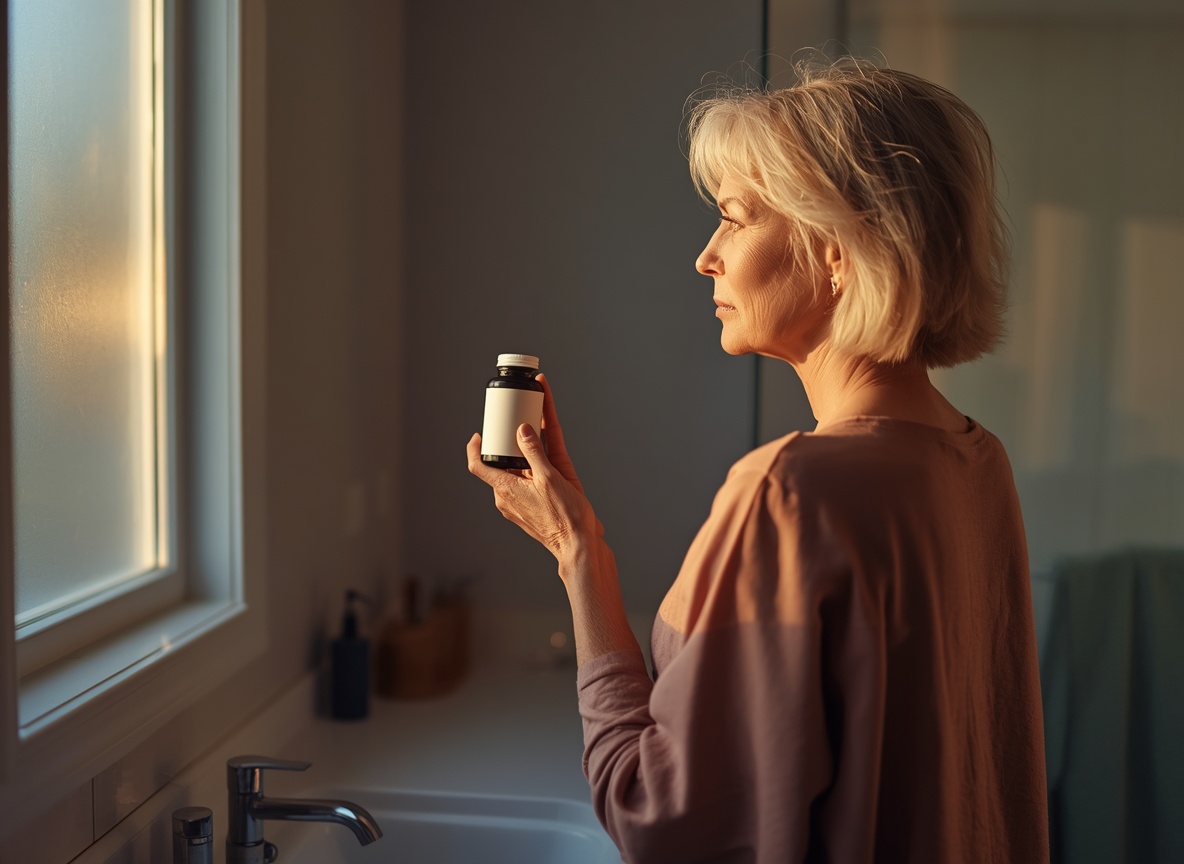
Dentavive is a chewable oral probiotic. You take one tablet daily after brushing. You let it dissolve in your mouth. The label lists five probiotic strains, tricalcium phosphate and inulin. Each bottle holds 30 tablets. The brand states the product is manufactured in an FDA-registered, GMP-certified facility. That is a paperwork step, not an FDA endorsement. No dietary supplement is FDA approved.
The company attributes formulation to Jason Harrison, described as a medical researcher. No independent institutional affiliation appears on the label or website. The product is sold only through the official website. The brand states it is not available through US pharmacy chains or big-box retailers.
What is inside: ingredients versus study doses
The label discloses five probiotic strains and two supporting ingredients. Total CFU is stated as more than 3 billion per tablet. Here is how each ingredient checks against the published research.
Lactobacillus reuteri
This is the most researched strain in the formula. A 2025 randomized trial in Oral Health and Preventive Dentistry used 1 times 10 to the ninth CFU per day for 8 weeks in 120 patients with periodontitis or gingivitis. Probing depth improved by 35.8%. Sixty-eight point three percent of patients achieved at least 2 mm reduction versus 13.3% on placebo. TNF-alpha fell 45.3%. IL-6 fell 45.2%. Source: Lu et al., Oral Health Prev Dent, 2025.
Other RCTs showed mixed results. A 2012 trial by Iniesta et al. found no difference in plaque or bleeding between L. reuteri and placebo in gingivitis patients. A 2013 trial by Hallstrom et al. found reduced Prevotella intermedia counts but no clinical improvement. A 2016 trial by Schlagenhauf et al. found no cytokine changes in pregnancy gingivitis. Source: Iniesta et al., 2012; Hallstrom et al., 2013; Schlagenhauf et al., 2016.
A 2020 meta-analysis of periodontal trials found L. reuteri improved pocket depth and clinical attachment level in several studies. Teughels et al., 2013, found greater improvement in pocket depth and attachment level after 12 weeks. Vicario et al., 2013, found significant improvement in plaque, bleeding and pocket depth. Laleman et al., 2020, found fewer sites required surgery after probiotic treatment. Source: Teughels et al., J Clin Periodontol, 2013; Vicario et al., 2013; Laleman et al., J Clin Periodontol, 2020.
The honest summary: L. reuteri has the strongest evidence of any oral probiotic strain. The evidence is mixed. It helps some people with periodontitis. It does not help everyone with gingivitis.
Streptococcus salivarius K12
This strain is studied specifically for halitosis. A 2022 trial by He et al. randomized 28 subjects with tongue coating-associated halitosis to K12 or placebo for 30 days. Organoleptic scores and volatile sulfur compound levels decreased significantly versus baseline on day 1 after treatment. P equals 0.001 and P equals 0.012. However, there was no significant difference versus placebo in the multi-level regression model. The authors concluded that removing tongue coating is required before K12 use. Source: He et al., 2022, PMID 32227309.
A 2014 meta-analysis found probiotics overall reduce volatile sulfur compounds and organoleptic scores in halitosis. The effect is real but modest. Source: PMID 25382889 meta-analysis.
Bifidobacterium lactis
A 2020 trial by Invernici et al. tested B. lactis HN019 in 30 periodontitis patients for 12 weeks. Pocket depth and clinical attachment level decreased significantly in the probiotic group. Porphyromonas gingivalis levels also fell. Source: Invernici et al., PLoS ONE, 2020.
Dentavive uses B. lactis BL-04, a different strain designation. The HN019 trial is the closest human periodontal evidence for this species.
Lactobacillus paracasei and Lactobacillus salivarius
These two strains have limited human oral trial data. L. paracasei has been studied for competitive exclusion of Streptococcus mutans in vitro and in small mechanistic studies. L. salivarius has been studied for bacteriocin production against anaerobic pathogens. Neither has large RCT evidence for gum disease outcomes in the way L. reuteri does. The mechanism is plausible. The clinical trial record is thin.
Tricalcium phosphate
This mineral supplies calcium and phosphate ions. It supports enamel remineralization. The research base is strongest for topical application in toothpaste and professional fluoride treatments. The evidence for oral supplementation specifically is thinner. The conceptual rationale is sound. The direct clinical trial data for swallowed tricalcium phosphate and enamel repair are limited.
Inulin
Inulin is a prebiotic fiber. It feeds beneficial bacteria. No human oral health trials exist for inulin as a standalone supplement. It is a reasonable formulation addition. It is not an active therapeutic ingredient.
What the label gets right
- All five strains are disclosed by name. No proprietary blend hiding the bacteria.
- The chewable format is the right delivery method for oral probiotics. Swallowed capsules bypass the mouth.
- L. reuteri is the most evidence-backed strain for gum health in the oral probiotic category.
- S. salivarius K12 is the most studied strain for halitosis specifically.
- The manufacturing credentials are standard but real: FDA-registered facility, GMP-certified.
What the label gets wrong or overstates
- The marketing implies clinical proof for the finished Dentavive formula. No such trial exists. All evidence is ingredient-level.
- The website displays an FDA Approved badge. The fine print clarifies this means the facility is FDA-registered. The supplement itself is not FDA approved. No supplement is.
- The guarantee terms conflict. The sales page states 60 days. The refund policy page states 180 days from ship date. Both appear on the official site.
- No public certificate of analysis exists. The CFU count at expiration is not independently verified.
Price per day
One bottle costs 69 dollars. It contains 30 tablets. That covers 30 days. The per-day cost is 2.30 dollars. Shipping may be added.
Two bottles cost 128 dollars. That covers 60 days. The per-day cost is 2.13 dollars.
Three bottles cost 177 dollars. That covers 90 days. The per-day cost is 1.97 dollars. Free shipping.
Six bottles cost 294 dollars. That covers 180 days. The per-day cost is 1.63 dollars. Free shipping.
Prices shift during promotions. The six-bottle plan asks you to commit to 180 days of supply. Verify the current numbers at checkout.
For context, BioGaia Prodentis lozenges, which contain two L. reuteri strains at high concentration and which the manufacturer states are backed by more than 70 published clinical studies, typically cost less per month than one Dentavive bottle.
Complaints and guarantee
The verified complaint record is thin. No Better Business Bureau entries as of August 2026. Reddit discussions question whether the marketing outpaces the evidence. Some users report mild digestive discomfort during the first week. No pattern of billing fraud, subscription traps or hidden rebills exists.
The guarantee requires attention. The sales page advertises 60 days. The refund policy page states 180 days from ship date. Both are published on the official website. They conflict. To request a refund, email support. Return all bottles to P.O. Box 90129, Lakeland, Florida 33804. Include your order ID. Pay your own return shipping. Keep your order confirmation and tracking number.
Safety in brief
The probiotic strains are generally recognized as safe for healthy adults. Mild bloating or gas during the first week is the most commonly reported issue. People with compromised immune systems, those on immunosuppressants, or anyone with a central venous catheter should not take probiotics without medical approval. Pregnant or breastfeeding individuals should consult a doctor first. Dentavive is not a treatment for diagnosed periodontal disease. It is not a substitute for professional dental care.
Who it fits
- You maintain solid brushing and flossing habits but want a microbiome-support layer.
- You have persistent bad breath that standard hygiene does not fully resolve. S. salivarius K12 is the most targeted strain for this.
- You have already seen a dentist and ruled out active periodontal disease.
- You are realistic about a months-long evaluation window and can track symptoms weekly.
Who should skip it
- You have active, diagnosed periodontal disease requiring scaling, root planing or surgery. A supplement is not a substitute for professional care.
- You are immunocompromised or take immunosuppressant medications.
- You expect fast results. The ingredient research shows benefits that develop over weeks to months.
- You want the strain with the deepest evidence base at the lowest cost. BioGaia Prodentis focuses on two L. reuteri strains the manufacturer says are backed by more than 70 clinical studies.
How we scored it
Scores reflect the editorial team’s reading of public evidence as of August 2026. A published finished-product trial or a public certificate of analysis would move them.
The bottom line
Dentavive is a defensible chewable oral probiotic in a legitimate product category. The five strains are documented in published literature. The chewable format is appropriate. The marketing overstates what ingredient-level evidence can guarantee. The guarantee pages conflict. The price is premium for a category where deeper-evidence competitors exist.
If you want a multi-strain chewable with L. reuteri and S. salivarius K12, Dentavive is a reasonable experiment inside the refund window. If your primary concern is gum disease, see a periodontist first. If your primary concern is halitosis, scrape your tongue first. Then consider a probiotic. For the full comparison of oral health options, see our Oral Health Supplements: What Works guide and our oral health hub.
Frequently Asked Questions
Is Dentavive worth the money?
It depends on your goal. The daily cost runs from 1.63 to 2.30 dollars. The five probiotic strains have published ingredient-level evidence for gum health and halitosis. But Dentavive as a finished formula has never been tested in a clinical trial. If you want a chewable oral probiotic with these specific strains, the formula is defensible. If you want proven gum disease treatment, see a periodontist first.
How much does Dentavive cost?
As of August 2026, the official site lists four packages. One bottle for 69 dollars. That is 2.30 per day. Two bottles for 128 dollars. That is 2.13 per day. Three bottles for 177 dollars with free shipping. That is 1.97 per day. Six bottles for 294 dollars with free shipping. That is 1.63 per day. Prices shift during promotions. Verify at checkout.
Does Dentavive really work for gum health?
No clinical trial has tested the finished Dentavive formula. Lactobacillus reuteri, the main strain, has mixed RCT results. Some trials showed improved pocket depth and attachment level in periodontitis patients. Others showed no difference in gingivitis. Streptococcus salivarius K12 reduced volatile sulfur compounds in some halitosis studies but not when tongue coating was present. Individual results vary.
What are the most common complaints about Dentavive?
The verified complaint record is thin. No BBB entries as of August 2026. Reddit discussions question whether the marketing outpaces the evidence. A minority of users report mild digestive discomfort during the first week. The main criticism is the price relative to generic oral probiotics that contain similar strains.
What is the Dentavive refund policy?
The guarantee exists but the terms conflict. The sales page states 60 days. The refund policy page states 180 days from ship date. Both appear on the official website. To request a refund, email support and return all bottles to P.O. Box 90129, Lakeland, Florida 33804. Return shipping is on you. Keep your order confirmation and tracking number.
Where is the safest place to buy Dentavive?
Only through the official website. The brand states it is not sold through US pharmacy chains or big-box retailers. Third-party listings sit outside the guarantee and may be counterfeit. If you order, keep the order ID and photograph the package on arrival.