
ProstaDefend ingredients: a dose audit that cannot start
After 50 Strong audited every ingredient ProstaDefend names against the human trials. The audit produces one finding before any other: there are no doses to audit. No milligrams, no standardizations, no third-party verification, and two different formulas circulating on the company’s own storefronts. Around that emptiness, the ingredient record speaks clearly. Pygeum carries the best support in the formula, at low evidence quality. Nettle follows in combination studies. Saw palmetto, the presumed anchor, failed its two biggest trials against placebo. And three of the six named botanicals have no prostate-specific human evidence at all. Here is each ingredient, its studied dose, and the verdict the undisclosed label forces.
- Cannot verify, all six: no milligram is published for any ingredient on either formula version, so no dose can be compared to any trial.
- Best-supported: pygeum, 18 older randomized trials in over 1,500 men, at roughly 75 to 200 mg of standardized extract; Cochrane calls the evidence small and short.
- Failed its trials: saw palmetto, no better than placebo at 320 mg in the New England Journal of Medicine or at 960 mg in JAMA.
- Filler by prostate evidence: cat’s claw, soursop and red raspberry, plus an interaction liability from the cat’s claw.
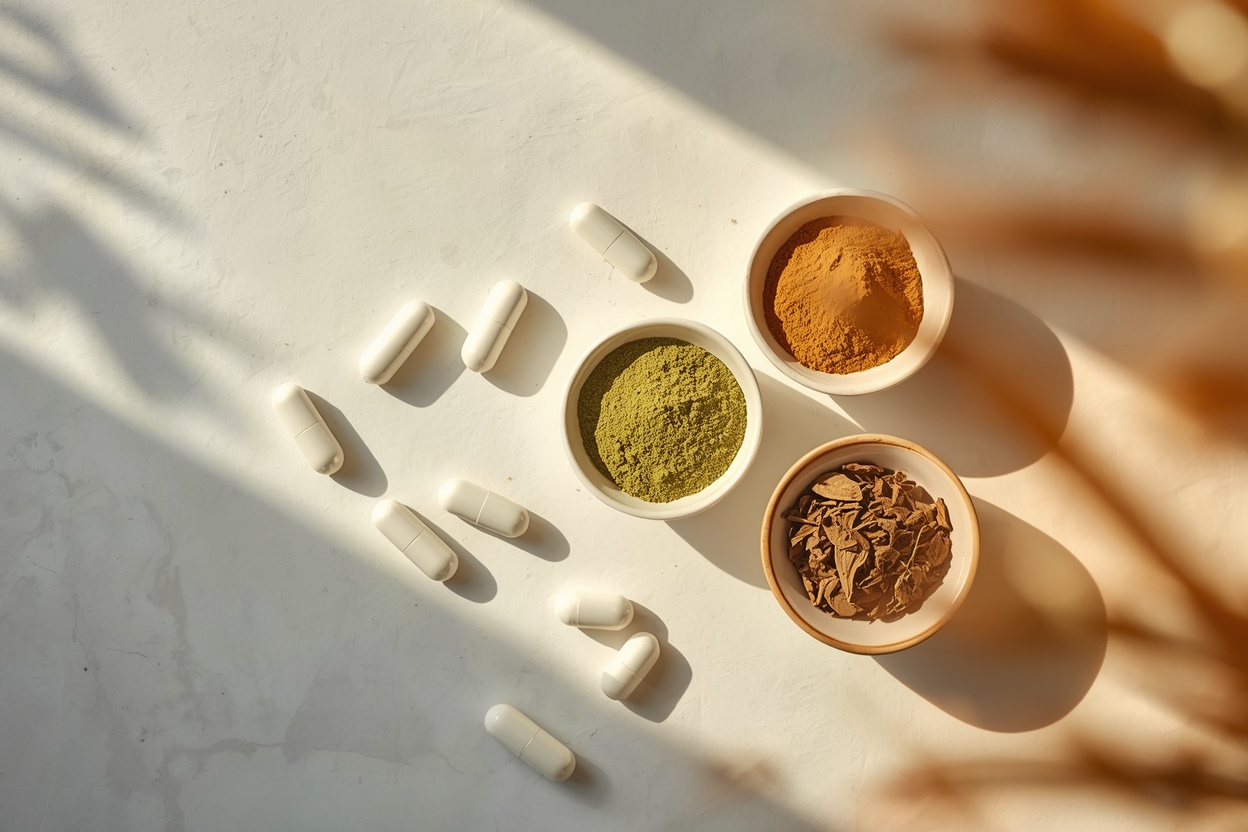
The dose audit
| Ingredient | Studied dose for prostate | ProstaDefend status | Verdict |
|---|---|---|---|
| Saw palmetto | 320 to 960 mg per day, standardized extracts, in trials that failed to beat placebo | Named; no dose, no standardization | Cannot verify; the evidence says standardization decides whether it works at all |
| Pygeum africanum | Roughly 75 to 200 mg standardized extract per day; 18 RCTs in over 1,500 men | Named; no dose, no standardization | Cannot verify; best support in the formula at low evidence quality |
| Stinging nettle root | Several hundred milligrams daily, mostly in combination formulas | Named; no dose | Cannot verify; combination-trial support only |
| Cat’s claw | No prostate-specific human dose exists | Named; no dose | Filler for prostate purposes; documented immunosuppressant interaction |
| Soursop | No prostate-specific human dose exists | Named; no dose | Filler; preclinical research only, laboratory neurotoxicity questions at high intake |
| Red raspberry | No prostate-specific human dose exists | Named; no dose | Filler; general antioxidant with no prostate evidence |
Ingredient by ingredient: what the research says
Saw palmetto: the famous ingredient with the losing record
The herb most associated with prostate supplements, and the one this formula presumably leans on hardest, has the category’s clearest negative record. At 320 mg per day it failed to beat placebo in the New England Journal of Medicine. At 960 mg per day, triple the standard dose, in 369 men followed for 72 weeks in JAMA, it failed again, with the placebo group improving slightly more on the standard symptom score. A 2023 Cochrane review of 27 studies found little to no benefit overall. The 2024 exception matters precisely because it is an exception: a phytosterol-enriched extract performed well, proving the plant contains something useful when standardized properly, and proving nothing about a label that declines to say whether it standardized anything. Our saw palmetto guide has the complete record.
Pygeum: the best evidence in the bottle
African plum bark carries the formula’s strongest case. A review in the American Journal of Medicine pooled 18 randomized trials in over 1,500 men and found participants on pygeum more than twice as likely to report symptom improvement. Cochrane’s caution frames it honestly: the studies were small, averaged 64 days, and used varied preparations. Within an undisclosed-dose formula, even the best-supported ingredient becomes a name rather than a dose. The pygeum guide covers what the extract standardizations should look like on a real label.
Nettle, cat’s claw, soursop and red raspberry
Nettle root appears in supportive combination trials rather than strong standalone ones, and it nudges blood pressure and blood sugar slightly, which belongs on the medication-review list. Cat’s claw has thin prostate evidence and a documented interaction with immunosuppressant medication, a poor trade for label space. Soursop’s research is preclinical with open laboratory neurotoxicity questions at sustained high intakes. Red raspberry is a general antioxidant. Together they round out a formula whose auditable core is two ingredients deep.
What the label leaves out
The omissions are the story. Milligram doses for every ingredient, without which no trial comparison exists. Extract standardizations, which the 2024 saw palmetto result proves are decisive. Beta-sitosterol, the component with the most consistent symptom-relief signal in the entire category, appears in affiliate materials for ProstaDefend but in none of its official formula lists: the one ingredient with the best evidence is the one the label forgot, or never had. And third-party testing or a certificate of analysis, the mechanism by which a buyer verifies label claims at all. Four omissions, each load-bearing, none accidental in effect.
The bottom line on the label
Audit result. Zero ingredients can be confirmed as dosed correctly, because zero doses are published. One ingredient, pygeum, has real but low-quality support it cannot be measured against. One, saw palmetto, has a documented losing record whose only modern exception requires exactly the standardization this label keeps private. Three are filler by the prostate evidence. And the strongest-evidence component in the category, beta-sitosterol, is missing from every official list. That makes ProstaDefend a formula whose only fully verifiable property is that it cannot be verified. For what that means in price and practice, see our full ProstaDefend review; for the safety picture, the side effects guide.
Frequently Asked Questions
What are the active ingredients in ProstaDefend?
That depends on which storefront you order from, which is the first finding of this page. The main version lists six botanicals: saw palmetto, pygeum africanum, stinging nettle root, cat’s claw, soursop and red raspberry. A second storefront version lists eight, adding pumpkin seed extract, lycopene and zinc. No version publishes per-ingredient milligrams or extract standardizations, so the identity of the formula is the only thing on the label you can fully verify, and even that disagrees between the company’s own pages.
Is ProstaDefend dosed like the human trials?
There is no way to know, because no dose is published for any ingredient. That erases the entire dose audit. Saw palmetto was studied at 320 and 960 mg per day and failed to beat placebo at either; pygeum trials used roughly 75 to 200 mg of standardized extract; nettle root studies used several hundred milligrams, usually in combination formulas. Without milligrams on the ProstaDefend label, none of these numbers can be compared to the bottle, and a supplement that cannot be compared to its own evidence is a promise wearing a label.
Which ProstaDefend ingredients are filler?
By the prostate-specific human evidence, three of the six qualify. Cat’s claw has laboratory anti-inflammatory work but no meaningful human prostate trials, and it carries a documented immunosuppressant interaction that makes its presence a liability as much as an asset. Soursop’s research is mostly preclinical, with laboratory neurotoxicity questions at sustained high intakes. Red raspberry is a general antioxidant with no prostate-specific human data. None are harmful at ordinary doses. They occupy label space and price weight without carrying prostate evidence, which is what filler means on an evidence ledger.
Why do different sources list different ProstaDefend formulas?
Because the versions genuinely differ and nothing official reconciles them. The main storefront’s six-botanical list and the second storefront’s eight-botanical list are not typographical variants; they are different formulas. Formulas do get revised during a product’s life, but undisclosed revisions combined with undisclosed doses is not a versioning policy, it is an audit-prevention policy. Some affiliate materials mention further ingredients, including beta-sitosterol, the one component with the most consistent symptom-relief signal in the category, which appears in no official list at all. The only list that matters is the Supplement Facts panel on the bottle that arrives.
What is missing from the ProstaDefend label?
Four things, each load-bearing. Milligram doses for every ingredient, without which no trial comparison is possible. Extract standardizations, which decide whether saw palmetto works at all: a 2024 trial found benefit only from a phytosterol-enriched extract, and the category’s earlier failures used unstandardized preparations. Beta-sitosterol, the component with the most consistent evidence in the entire prostate category, appears in affiliate materials but not in any official formula list. And any third-party testing or certificate of analysis, which is how a buyer verifies that what the label claims is what the capsule contains. A label missing all four is not a label. It is a list.
What should I check on my ProstaDefend bottle?
Five checks before the first capsule. Match the ingredient list against the version you believed you ordered, because the company’s own pages disagree. Read every milligram figure against the studied doses in our ingredient guides: saw palmetto at 320 to 960 mg failed its trials, pygeum at 75 to 200 mg standardized extract carried the best support, nettle at several hundred milligrams appears in combination studies. Look for standardization percentages, especially on saw palmetto. Confirm third-party testing if any is claimed, and verify it independently. And bring the bottle to your doctor before starting, with your PSA conversation scheduled first, because the label’s most testable ingredient property is exactly the one ProstaDefend keeps private.