
TonicGreens review: the label reads better than the marketing around it
After 50 Strong checked the published TonicGreens label, the company’s storefront materials and the independent investigation of its claims. The product is genuinely unusual for this niche in one way: its Supplement Facts panel is real, with blend-level weights most competitors never publish. And it is entirely usual in the ways that decide whether a supplement earns your money: the immune story borrows from quercetin and resveratrol, two compounds that do not appear on the label at all; the certified-organic claim has no certification behind it; a connected marketing page goes further than the official site into disease territory, naming herpes; the refund clock runs from the ship date; and no trial has ever tested the finished product. Our verdict: 2.2 out of 5. Here is the full breakdown.
- Label, published: per 4.4 g scoop, four disclosed blend weights: 3,000 mg superfood and mushroom blend, 1,000 mg herbs and extracts, 350 mg apple fiber, 22.5 mg three-strain probiotic premix.
- Documented discrepancies: certified-organic marketing with no certification on the label; quercetin and resveratrol marketed as pillars but absent from the panel; a herpes-cure claim on a connected page; 60-day refund clock starting at ship date.
- Price per day: reported at 2 dollars 63 cents at one bottle, 1 dollar 97 at three, and 1 dollar 63 at six. Verify at checkout.
- Safety note: the leafy-green ingredients carry vitamin K. Warfarin users need their doctor first, a caution for the whole greens category.
What TonicGreens is
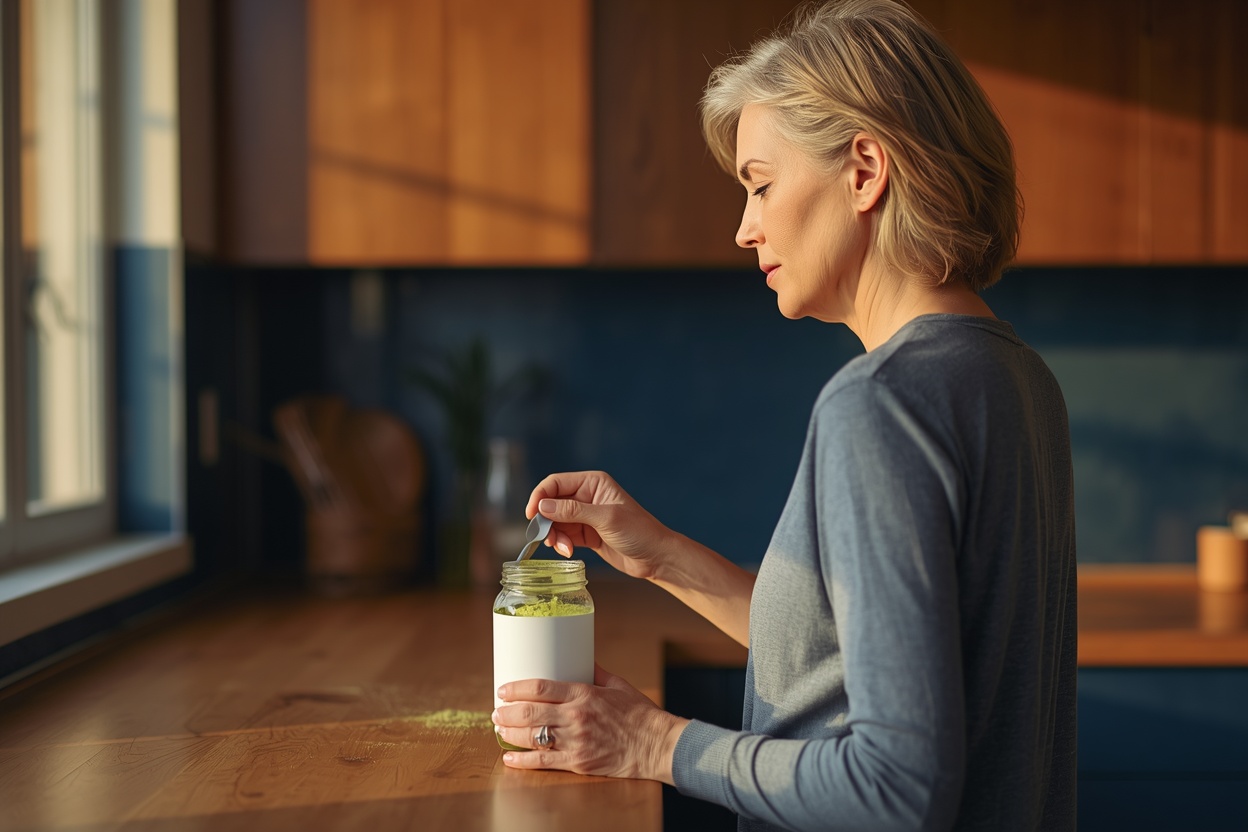
TonicGreens is a powdered greens supplement sold through its own site, positioned as a six-in-one daily habit for immune support, antioxidant intake and digestion. One scoop, four and a half grams, mixed into water or a smoothie, once or twice a day. The operation behind it is more legible than most: the label names a distributor, PhytoThrive Labs of Aurora, Colorado, orders run through a standard third-party retailer of record, there is no subscription, and the panel this review draws on was verified from the live official site in July 2026. That legibility is the good news, and it makes the marketing gaps around it more telling, not less.
What the label actually shows
Credit where due: blend-level disclosure is better than nothing, and most products in this niche publish nothing. Per scoop, the verified panel lists a 3,000 mg proprietary superfood, antioxidant and mushroom blend of 21 ingredients, heavy on ordinary food powders like alfalfa, carrot, beet, kale and broccoli, with maitake and reishi mushrooms at the end of a weight-ordered list that suggests they are among the smallest contributors. A 1,000 mg herbs and extracts blend holds nine ingredients, including a 10:1 turmeric extract, ashwagandha, green tea and ginger. Then 350 mg of apple fruit fiber, and a 22.5 mg three-strain probiotic premix.
Now the arithmetic that decides the immune question. Curcumin trials use hundreds to thousands of milligrams daily. Ashwagandha trials use 300 to 600 mg. Immune-related quercetin trials use 500 to 1,000 mg. Turmeric, ashwagandha and any hypothetical quercetin must split that single 1,000 mg blend nine ways with nothing left over, in amounts the label declines to state. And the probiotic fraction is tiny by the standards of its own category, where meaningful doses are counted in billions of colony-forming units, not milligrams of a premix. The label tells you what is in the scoop. It does not, and on this math cannot, tell you that the scoop delivers a studied dose of anything.
The three documented discrepancies
The organic claim. Marketing describes certified organic, grade-A ingredients. The Supplement Facts panel carries no USDA seal, no certifying body and no organic language. Certified is a regulated word, and nothing this review or the independent investigation behind it could locate backs it.
The missing pillars. The six functional groups in the marketing include a quercetin group and a resveratrol group. Neither quercetin nor resveratrol appears anywhere on the four-section label. The two most science-flavored names in the pitch are absent from the product itself.
The disease claim. A marketing page connected to the same operation, sharing its support email and return address, promotes the formula with a claim that it kills the herpes virus, in search-and-destroy language. The official checkout site does not make that claim. No dietary supplement treats herpes, and language like that is not marketing enthusiasm, it is a legal and factual line being crossed one page away from the one you pay on.
The real price per day
Published materials report 79 dollars for one bottle, 59 dollars each for three, and 49 dollars each for six, with 30 one-scoop servings per container. The per-day math: 2 dollars and 63 cents at one bottle, 1 dollar and 97 at three, 1 dollar and 63 at six, plus your own return shipping if you ever claim the guarantee. Those figures come from third-party materials with their own dates, and the company’s terms allow prices to change, so confirm the real total at checkout. For context, most greens powders run one to three dollars per serving: the price is ordinary. The value question is different. Ordinary prices usually buy either disclosed doses or a product trial. TonicGreens offers blend totals with no per-ingredient amounts and no finished-product study, which means you are paying a studied-product price for an unstudied one.
Complaints and refund policy
The 60-day, 100 percent money-back guarantee is in writing, and the clock detail matters more than the headline: the terms start it on the ship date, not the delivery date most buyers assume. Depending on shipping speed, a week or more of your trial window elapses before the jar is in your hands. Return shipping is on you. Note the ship date from tracking the day it sends, keep every container, and decide early if you plan to test the guarantee.
Our September 2026 search found no FTC enforcement action naming TonicGreens or its distributor. Buyer-reported complaints in the independent coverage cluster where you would expect: shipping speed, refund timing confusion, taste, and the price of commitment-sized bundles. For the marketing-claims side of the ledger, our TonicGreens scam check walks the disease-claim and organic discrepancies in full, and the safety guide covers the vitamin K interaction and the rest.
Who TonicGreens fits, and who should skip it
Consider it only if: you want a greens habit rather than a dosed intervention, blend-level disclosure is enough for you, you take no blood thinners, and the price per day is acceptable as a food-like convenience rather than an immune strategy.
Skip it if: you take warfarin or another anticoagulant, because the leafy greens carry vitamin K that works against it. Skip it if a virus or herpes ad brought you here, because nothing in the jar treats infection. Skip it if you want studied doses, because this label cannot provide them. Skip it if you expect the quercetin-and-resveratrol story from the marketing, because those compounds are not on the panel. And if what you actually want is evidence-based immune support after 50, our immune support hub starts with the two tools human trials actually back, vitamin D for the deficient and zinc lozenges at the first sniffle, with the doses that match the research.
Score card and verdict
Our scores, category by category:
- Label transparency: 3 out of 5. Real blend-level weights, better than most of this niche; docked for undisclosed per-ingredient amounts, the absent marketed pillars, and the unsupported organic claim.
- Evidence match: 1.5 out of 5. No finished-product trial, and the label math cannot reach studied doses of anything; the two most scientific-sounding marketed ingredients are not on the panel.
- Safety: 2.5 out of 5. Food-like ingredients are mostly mild, but the vitamin K content is a real warfarin interaction, amounts are undisclosed, and a herpes-cure claim orbiting the brand is a trust problem with safety implications of its own.
- Value: 2 out of 5. Ordinary greens-powder prices for a formula that cannot be dosed against any trial.
- Company practices: 2 out of 5. Named distributor, written guarantee, no subscription. Docked for the documented organic-certification gap, the connected-page disease claim, and the ship-date refund clock. No FTC actions found in our search.
Overall: 2.2 out of 5.
Verdict. TonicGreens publishes more of its label than most products we review, and that buys it something real. But an immune supplement whose immune story rests on two ingredients it does not contain, whose organic claim has no certificate, and whose guarantee clock starts before you open the jar is asking you to pay for a story the paperwork does not fully support. If a daily greens habit is what you want, this is a readable candidate. If immune support at studied doses is what you want, the evidence points elsewhere, starting with a vitamin D test and the honest shortlist.
Frequently Asked Questions
Is TonicGreens a legitimate product?
Yes in the legal sense, with real documentation and real caveats. TonicGreens sells through its own site with a named distributor, PhytoThrive Labs of Aurora, Colorado, a standard third-party retailer of record processing orders, a genuine Supplement Facts panel with blend-level weights, and a written 60-day guarantee. The caveats, documented by independent review in July 2026: marketing calls the ingredients certified organic with no certification anywhere on the label, and a connected marketing page sharing the operation’s support email and return address makes a disease claim, naming herpes, that the official checkout site itself does not make. Legitimately sold, selectively documented, over-claimed in its orbit.
Does TonicGreens really support the immune system?
Nobody knows, because no trial has tested TonicGreens as a finished product, and the label cannot be matched to ingredient trials. The marketing builds six functional pillars around quercetin and resveratrol, yet neither quercetin nor resveratrol appears anywhere on the actual Supplement Facts panel. What the label does contain is a 3,000 mg superfood and mushroom blend of 21 ingredients, a 1,000 mg herbal blend of nine, and a 22.5 mg probiotic premix, with no per-ingredient amounts. Compare that with the trials this category borrows from: curcumin studies use hundreds to thousands of milligrams, ashwagandha trials use 300 to 600 mg, and immune-related quercetin trials use 500 to 1,000 mg of a compound the label does not list. The immune story is ingredient-borrowed from compounds the product does not verifiably contain.
What are the ingredients in TonicGreens?
Per one 4.4 gram scoop, the published label shows four sections: a 3,000 mg proprietary superfood, antioxidant and mushroom blend of 21 ingredients led by alfalfa, carrot, beet, kale, broccoli, maitake and reishi; a 1,000 mg herbs and extracts blend of nine, including a 10:1 turmeric extract, ashwagandha root, green tea, ginger and eleuthero; 350 mg of apple fruit fiber; and a 22.5 mg three-strain probiotic premix of Lactobacillus reuteri, Bacillus coagulans and Lactobacillus acidophilus. Individual amounts within the blends are not disclosed, which is standard proprietary practice, and the probiotic fraction is tiny by the standards of probiotic dosing, which is measured in billions of colony-forming units rather than milligrams of a premix.
How much does TonicGreens cost per day?
Published materials report three packages: one bottle at 79 dollars, three bottles at 59 dollars each, and six bottles at 49 dollars each, with one scoop a day and 30 scoops per container. That works out to 2 dollars and 63 cents per day at the single-bottle price, 1 dollar and 97 cents at the three-bottle price, and 1 dollar and 63 cents at the six-bottle price, before the return shipping a refund would cost you. Prices change and third-party materials carry their own dates, so confirm the real total at checkout. For context, most greens powders run 1 to 3 dollars per serving, so the price is ordinary for the category. What the price buys, undisclosed per-ingredient doses in a formula with no product trial, is the less ordinary part.
What is the TonicGreens refund policy?
The written terms state a 60-day, 100 percent money-back guarantee, and here is the detail most buyers miss: independent review of the official materials found the clock starts on the ship date, not the delivery date most people assume. At typical shipping speeds that costs you most of a week of trial time before the product arrives. The refund policy also states return shipping is paid by the buyer. Treat the window as shorter than advertised: note the ship date from your tracking email the day it sends, and if you intend to test the guarantee, decide before the clock runs rather than after. Keep every container and your order confirmation.
Who should not take TonicGreens?
Four groups should pause or get clearance first. Anyone on warfarin or another blood thinner, because the leafy-green ingredients carry vitamin K, which works directly against those medications, a caution that applies to the whole greens-powder category. Anyone whose immune interest traces to a specific disease claim they saw in an ad, because the herpes and virus language circulating around TonicGreens marketing comes from a connected page, not the label, and no supplement treats infection. Anyone under 18, pregnant or managing a chronic condition, per the label’s own caution and ordinary prudence. And anyone expecting measurable immune outcomes at a studied dose: the formula’s per-ingredient amounts are undisclosed, so no such expectation can be calibrated. If your goal is evidence-based immune support after 50, our immune support hub starts with what trials actually show.