
Immune supplements that work: the honest ranking, dose by dose
After 50 Strong checked every immune supplement ingredient against the human trials for this guide. The category divides into three piles with a clean boundary. Vitamin D, for people whose blood test says they are low, has prevention-grade evidence across 25 randomized trials. Zinc lozenges at the first day of a cold and vitamin C as a regular habit shorten illnesses that have already started, modestly and honestly. Elderberry joins them with smaller, thinner trials. Everything marketed as a general immune booster, the blends, the megadoses, the total-protection promises, has no prevention evidence anywhere. Below is the ladder, the doses that match the trials, the combination rules that keep a stack safe, and the proven column that out-effects every bottle on the shelf.
- Best evidence: correcting a tested vitamin D deficiency: fewer respiratory infections across 25 trials, strongest by far in the deficient, roughly a 70 percent relative risk reduction there.
- Symptom tools: high-dose zinc lozenges within 24 to 48 hours of first symptoms, colds shortened a third to over 40 percent in the positive analyses; regular vitamin C, about 8 percent shorter colds in adults.
- Preliminary: elderberry, shorter and milder colds in small, dated trials; standardized extracts only.
- Safety notes: zinc above 40 mg daily depletes copper; nasal zinc caused permanent smell loss; gram-level vitamin C raises kidney stone risk in men.
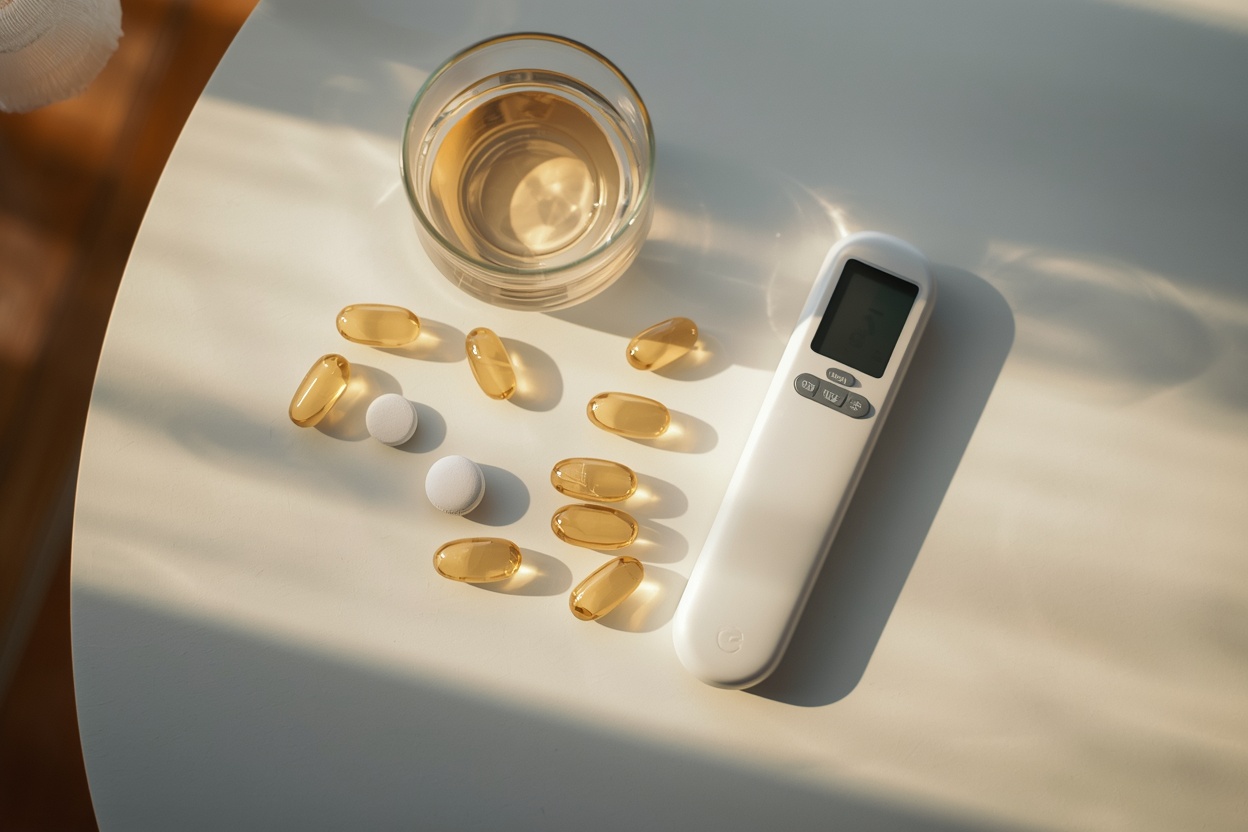
The evidence ladder: three tiers
Tier 1: vitamin D, the one prevention-grade step
The meta-analysis pooled 25 randomized trials in 11,321 participants and found vitamin D supplementation reduced acute respiratory infections overall, but the shape of the benefit is the entire story: roughly a 70 percent relative risk reduction in people starting clearly deficient, little to nothing in those already sufficient. After 50, where skin production of the vitamin falls steeply and deficiency is common, that makes the blood test the first move and the correction the best-evidenced supplement step in the cabinet. Daily or weekly dosing worked; occasional megadoses did not. Our vitamin D guide walks the test-first protocol.
Tier 2: zinc lozenges and vitamin C, the honest symptom tools
Both shorten illnesses that have already started, and neither prevents them. Zinc earns its tier at high doses only: roughly 80 to 92 mg of elemental zinc per day as slow-dissolving lozenges, started within 24 to 48 hours of first symptoms, shortened colds by a third to over 40 percent in the positive meta-analyses, with the 2024 Cochrane review calling the same evidence inconclusive and possibly slightly shortening. Vitamin C, taken regularly before cold season, trims about 8 percent off cold duration in adults and does nothing when started at the first sniffle. Our zinc guide and vitamin C guide carry the dose windows and the limits.
Tier 3: elderberry, and the booster fiction
Elderberry sits at the top of the preliminary tier: shorter, milder colds in 312 air travelers, faster flu recovery in a small study, and systematic reviews converging on the same word, insufficient. Standardized extracts only; gummies without stated flavonoid content are decoration. Below elderberry sits the fiction: every general immune booster blend, none of which has prevention evidence anywhere, and some of which borrow the credibility of compounds their labels do not contain, a pattern our TonicGreens review documented line by line. The boundary between tier 3 and the fiction is one question: can a product’s dose be checked against a human trial. Elderberry, standardized, answers yes at low certainty. Boosters answer no at any.
The doses that actually appear in trials
| Supplement | Studied dose | Best human result | Honest grade |
|---|---|---|---|
| Vitamin D, for the deficient | 400 to 4,000 IU daily or weekly, matched to a tested level | Fewer acute respiratory infections across 25 trials and 11,321 participants; strongest, roughly 70 percent relative risk reduction, in the deficient | Prevention-grade, for measured deficiency only |
| Zinc lozenges, elemental | 80 to 92 mg per day, dissolved in mouth, started within 24 to 48 hours | Colds shortened a third to over 40 percent in positive analyses; strictest review: inconclusive, may slightly shorten | Best symptom tool, narrow window |
| Vitamin C, regular use | 200 mg to 1,000 mg daily, ongoing | About 8 percent shorter colds in adults; no prevention; onset dosing does nothing | Modest duration benefit only |
| Elderberry, standardized extract | 600 to 900 mg extract daily, or syrup while symptomatic | Shorter, milder colds in 312 travelers; small flu study, four days faster recovery | Preliminary, low certainty |
| Immune booster blends | None established | No trial shows prevention for any general booster formulation | Marketing without a trial |
Combination rules: what stacks, what clashes
Vitamin D and vitamin C stack without interaction and answer different questions, deficiency correction and duration shortening. Low-dose daily zinc sits beside both as long as the cabinet-wide total stays under the 40 mg upper limit; above it, for months, zinc depletes copper and quietly undermines the immunity it was bought to support. The one timing rule belongs to antibiotics: quinolone and tetracycline courses bind zinc into an unabsorbable complex, so zinc doses and antibiotic doses need a two-hour separation in either order. High-dose zinc lozenges are not a daily companion; they are a days-long course started at the first symptom, deliberately brief because the dose that shortens colds is deliberately above the maintenance limit.
- Total the zinc column across multivitamins, lozenges and blends before the season starts.
- Never nasal zinc, in any product, for any reason: permanent smell loss, documented, no offsetting benefit.
- Separate zinc from antibiotics by two hours, and mention penicillamine on the same list.
- Count elderberry syrup sugar if blood sugar matters; capsules carry the same extract without it.
- Keep immune-stimulating botanicals away from immunosuppression and autoimmune conditions unless a doctor clears them.
Frequently Asked Questions
What is the best immune supplement?
There is no best, but there is a clear first move: a vitamin D blood test. If the test shows low levels, correcting them is the single best-evidenced immune supplement step available, because a meta-analysis of 25 randomized trials found vitamin D supplementation reduced respiratory infections, with the strongest protection, roughly a 70 percent relative risk reduction, in people who started deficient and little to no benefit in those already sufficient. Everything else is situational: high-dose zinc lozenges at the first day of a cold, vitamin C as a regular habit for its modest duration benefit, elderberry as a low-stakes optional extra. And a category-wide note: no supplement prevents colds in ordinary people or replaces vaccines, sleep and the rest of the proven column.
Do immune supplements actually work?
Specific ones, for specific situations, with modest and honest effect sizes. Vitamin D corrects a deficiency that measurably raises infection risk, with a 25-trial meta-analysis behind the correction. Zinc lozenges at high doses started within a day of symptoms shortened colds by a third to over 40 percent in positive analyses, with the strictest review calling the evidence inconclusive. Vitamin C does not prevent colds but shortens them by around 8 percent in adults when taken regularly. Elderberry shortened and softened colds in travelers and flu patients in small, dated trials. What does not work: every general immune booster, the blends promising total protection, the megadoses, none of which has prevention evidence anywhere. The category works where it is specific, doseable and tested. It fails everywhere else.
What is actually proven to boost the immune system?
If boost means prevent infections, the proven list starts with things that are not supplements: vaccines chosen for age, including the enhanced flu options after 65; seven to eight hours of sleep, since short sleep measurably raises cold susceptibility; regular moderate exercise; not smoking; and hand washing with direct trial support. Among supplements, only one has prevention-grade evidence: correcting a tested vitamin D deficiency, which reduced respiratory infections across a season in the deficient. Zinc, vitamin C and elderberry shorten illnesses that have already started; they do not shield you from catching them. The honest hierarchy puts vaccines, sleep and the lifestyle column above every bottle, and puts exactly one supplement step above the rest, because a blood test can tell you in advance whether it will work.
Can I take vitamin D, vitamin C and zinc together?
Yes, with ordinary arithmetic and one timing rule. Vitamin D and vitamin C have no interaction of consequence and address different situations, deficiency correction and duration shortening. Zinc taken as daily low-dose maintenance sits fine beside both, as long as the combined daily total from every product in the cabinet stays under the 40 mg upper limit, above which copper depletion begins over months. The one timing rule belongs to zinc and antibiotics: quinolone and tetracycline courses need a two-hour gap from any zinc dose. High-dose zinc lozenges are not a daily companion to anything; they are a short course started at the first symptom, days long, deliberately above the maintenance limit and deliberately brief. Total the daily column, separate zinc from antibiotics, and the stack is unremarkable in the best sense.
Which immune supplements are a waste of money?
Three categories, plus one attitude. General immune booster blends promising total protection, which no trial supports in any formulation. Megadoses of anything, where gram-level vitamin C buys stone risk rather than extra protection and chronic high-dose zinc buys copper deficiency rather than immunity. And products whose marketing borrows compounds their labels do not contain, a pattern our TonicGreens review documented in detail. The attitude is the deeper waste: buying any of this before the proven column is handled. The vaccines, the sleep, the movement and the blood test each out-effect every bottle on this shelf, and most of what remains belongs in the kitchen rather than the cabinet: citrus, peppers and a protein-adequate plate beat a capsule for every nutrient this category claims.
What should I check before buying any immune supplement?
Five checks, in order. Your blood work: a vitamin D level turns the best-evidenced supplement step from a guess into a measured correction, and the protection in the trials concentrated in the deficient. The doses on the label: lozenges must state elemental zinc so the 80 to 92 mg protocol can be summed; vitamin C claims beyond 1,000 mg daily are buying stone risk rather than benefit; elderberry should state standardization to flavonoids in milligrams. The totals across products: combined zinc under 40 mg daily for anything long-term. Your medication list: the zinc-antibiotic gap, and any immune-stimulating botanical against immunosuppressants or autoimmune conditions. And your expectations: shorter illnesses and corrected deficiencies, not shields, and never a substitute for the vaccines, sleep and habits that hold the top of the evidence ladder.