
Turmeric and curcumin for joint pain: evidence, absorption, and real doses
Curcumin is the rare kitchen-spice supplement with a real clinical trial behind it: 1,500 mg of curcuma extract matched ibuprofen for knee pain in 367 patients. Two problems stand between that result and your bottle. Absorption, and labels that sell spice weight as medicine. Here is the full picture.
- Evidence: non-inferior to ibuprofen 1,200 mg in a 4-week trial; confirmed versus placebo in multiple meta-analyses.
- Working dose: 1,000 to 1,500 mg of standardized extract daily, not kitchen turmeric.
- Absorption fix: piperine raised curcumin bioavailability by 2,000% in the classic study.
- Cautions: gallstones, blood thinners, pregnancy, and rare liver injury reports.
Turmeric is not curcumin
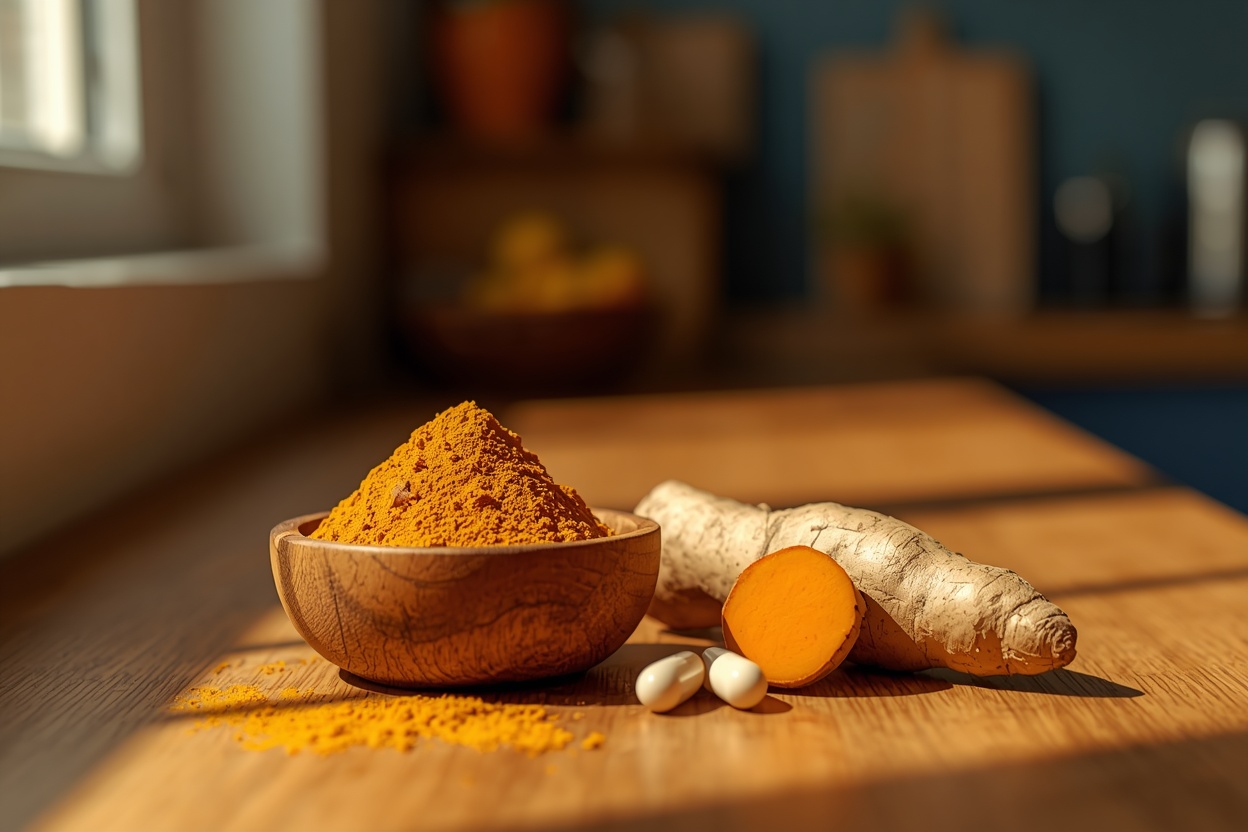
Turmeric is the yellow spice from the Curcuma longa root. Curcumin is the main active compound inside it. Plain turmeric powder contains only 3% to 5% curcumin by weight.
Do the math on a typical capsule. Five hundred mg of turmeric powder holds 15 to 25 mg of curcumin. The successful trials used 1,000 to 1,500 mg of extract standardized to about 95% curcuminoids. That gap, roughly 50-fold, is why adding turmeric to soup does not reproduce trial results.
The trial that made curcumin famous
Kuptniratsaikul 2014 randomized 367 knee osteoarthritis patients to curcuma extract 1,500 mg daily or ibuprofen 1,200 mg daily for 4 weeks. Curcuma proved non-inferior on total WOMAC score (p=0.010), pain (p=0.018) and function (p=0.010). Only stiffness missed significance, showing a trend at p=0.060.
The safety split favored the spice. Abdominal pain or distension hit 10.8% on curcuma versus 18.1% on ibuprofen (p=0.046). Two ibuprofen patients developed melena, black stools signaling gut bleeding. Seven ibuprofen patients dropped out over side effects versus one on curcuma.
An earlier 2009 trial by the same team had failed to prove equivalence by a narrow margin. The 2014 rerun fixed the design and succeeded. That history matters: curcumin earned its result the hard way, and the verdict is matched, not better. A 2012 trial also found curcuma extract added nothing on top of diclofenac. Curcumin is an alternative to an NSAID for some people, not an upgrade stacked on one.
What the meta-analyses say
Daily 2016 pooled eight RCTs with sample sizes ranging from 45 to 124: curcuma beat placebo on pain and function and matched painkillers. Wang 2021 covered ten RCTs with 786 patients: benefit versus placebo confirmed, with fewer adverse events than NSAIDs.
The honest asterisk: reviewers rated the evidence quality moderate to low. Small trials, varying extracts, short durations. The signal is real. The precision is not.
The absorption problem, and what piperine changes
Curcumin dissolves poorly in water and gets metabolized fast. In one study, even 12 grams of curcumin barely raised blood levels. Swallowing plain curcumin is close to sending it straight through.
The classic fix comes from Shoba 1998. Twenty mg of piperine, a black pepper extract, taken with curcumin raised its bioavailability by 2,000% in human volunteers. Modern formulas use other tricks too: phytosome complexes, liposomes, special oils. All chase the same goal.
Piperine carries a trade-off worth knowing. It slows the liver enzymes that clear many drugs, raising their blood levels. If you take daily prescription medication, an enhanced-absorption curcumin formula deserves a conversation with your pharmacist, not just your cart.
Reading a label without getting fooled
- Look for curcuminoid content, not turmeric weight. The label should say something like 1,000 mg extract standardized to 95% curcuminoids. Plain turmeric root powder is spice, at supplement prices.
- Check for an absorption strategy. Piperine, phytosome or liposomal on the label. No enhancer means minimal uptake.
- Match the trial dose. 1,000 to 1,500 mg of extract per day, usually split into two or three servings.
- Prefer third-party testing. FDA alerts have flagged turmeric powders contaminated with lead. A USP or NSF mark screens that out.
Interactions and who should skip curcumin
Gallbladder first. Curcumin stimulates bile flow and gallbladder contraction. In a 1999 ultrasound study of 12 healthy volunteers, 20 mg of curcumin reduced gallbladder volume by 29.3% within two hours. Anyone with gallstones or a bile duct obstruction should avoid curcumin supplements entirely. Source: Rasyid & Lelo, 1999.
Blood thinners. Curcumin may slow clotting. Combined with warfarin, apixaban or daily aspirin, that adds up. The same caution we apply to chondroitin applies here: one doctor conversation before combining.
Liver. Case reports published in recent years link curcumin supplements to rare liver injury, mostly with high-bioavailability formulas. Stop immediately and see a doctor for dark urine, yellowing skin or unusual fatigue.
Also on the list: pregnancy (avoid medicinal doses), iron deficiency (high doses reduce iron absorption), and scheduled surgery within 2 weeks (the clotting question again).
The bottom line
Curcumin is one of the few joint botanicals that survived a head-to-head trial against a drug. At 1,000 to 1,500 mg of standardized extract with an absorption enhancer, it offers ibuprofen-level relief with gentler stomach effects, over about 4 weeks. Buy the extract, not the spice. Respect the gallbladder and blood-thinner warnings. For how curcumin stacks up against other options, see the joint health hub and our glucosamine guide.
Frequently Asked Questions
Is turmeric the same as curcumin?
No. Turmeric is the spice root. Curcumin is its main active compound, making up about 3% to 5% of the powder by weight. A teaspoon of kitchen turmeric delivers perhaps 100 to 200 mg of curcumin. Joint trials used extracts standardized to 95% curcuminoids at 1,000 to 1,500 mg per day. Cooking with turmeric is pleasant, but it is not a studied joint dose.
Does curcumin really work for knee arthritis?
The evidence is genuinely positive. A Thai trial of 367 patients (Kuptniratsaikul, 2014) found curcuma extract at 1,500 mg daily non-inferior to ibuprofen 1,200 mg for knee pain and function over 4 weeks. Multiple meta-analyses confirm benefit versus placebo. Honest framing: curcumin matched a moderate ibuprofen dose, it did not beat it, and overall evidence quality is rated moderate to low.
Do I need piperine with curcumin?
Something has to solve the absorption problem, and piperine is the classic fix. In the Shoba 1998 study, 20 mg of piperine raised curcumin bioavailability by 2,000%. Without an enhancer, most curcumin passes through unabsorbed. One caution: piperine also raises blood levels of some medications, so check with your doctor or pharmacist if you take daily prescriptions.
What is the effective curcumin dose for joints?
Trials that worked used 1,000 to 1,500 mg per day of curcuma extract standardized for curcuminoids, usually split into two or three servings. Check the label for the curcuminoid content, not just turmeric root powder weight. A capsule with 500 mg of plain turmeric powder delivers only 15 to 25 mg of actual curcumin.
What are the side effects of curcumin?
Most people tolerate curcumin well. Trials report mild stomach upset, nausea or diarrhea, mainly at high doses. In the 2014 Thai trial, abdominal pain affected 10.8% on curcuma extract versus 18.1% on ibuprofen. One newer concern: published case reports link curcumin supplements, especially enhanced-absorption formulas, to rare liver injury. Stop and see a doctor if you notice dark urine or yellowing skin.
Who should not take curcumin supplements?
Skip curcumin or talk to your doctor first if you have gallstones or bile duct problems, since curcumin stimulates bile flow and gallbladder contraction. The same applies if you take blood thinners, because curcumin may slow clotting. Pregnant women should avoid medicinal doses. People with iron deficiency should know that high doses can reduce iron absorption.