
Boswellia for joints: does it work? AKBA, trials, and real doses
Boswellia is the fastest-acting joint ingredient with human trial support. Enriched extracts improved knee pain within 5 to 7 days in three separate studies, where glucosamine needs months. The catch sits on the label: only standardized extracts earned those results, and most bottles do not say what is inside. Here is what to know.
- Speed: significant pain improvement in 5 to 7 days with enriched extracts. Full effect builds over 4 to 12 weeks.
- Working doses: 100 to 250 mg daily of extract standardized to 20-30% AKBA, or 1,000 mg of a 40% extract.
- Mechanism: blocks the 5-LOX inflammation pathway, not the COX pathway NSAIDs use.
- Safety: trial labs matched placebo. Caution with warfarin, antiplatelets and NSAIDs. Avoid in pregnancy.
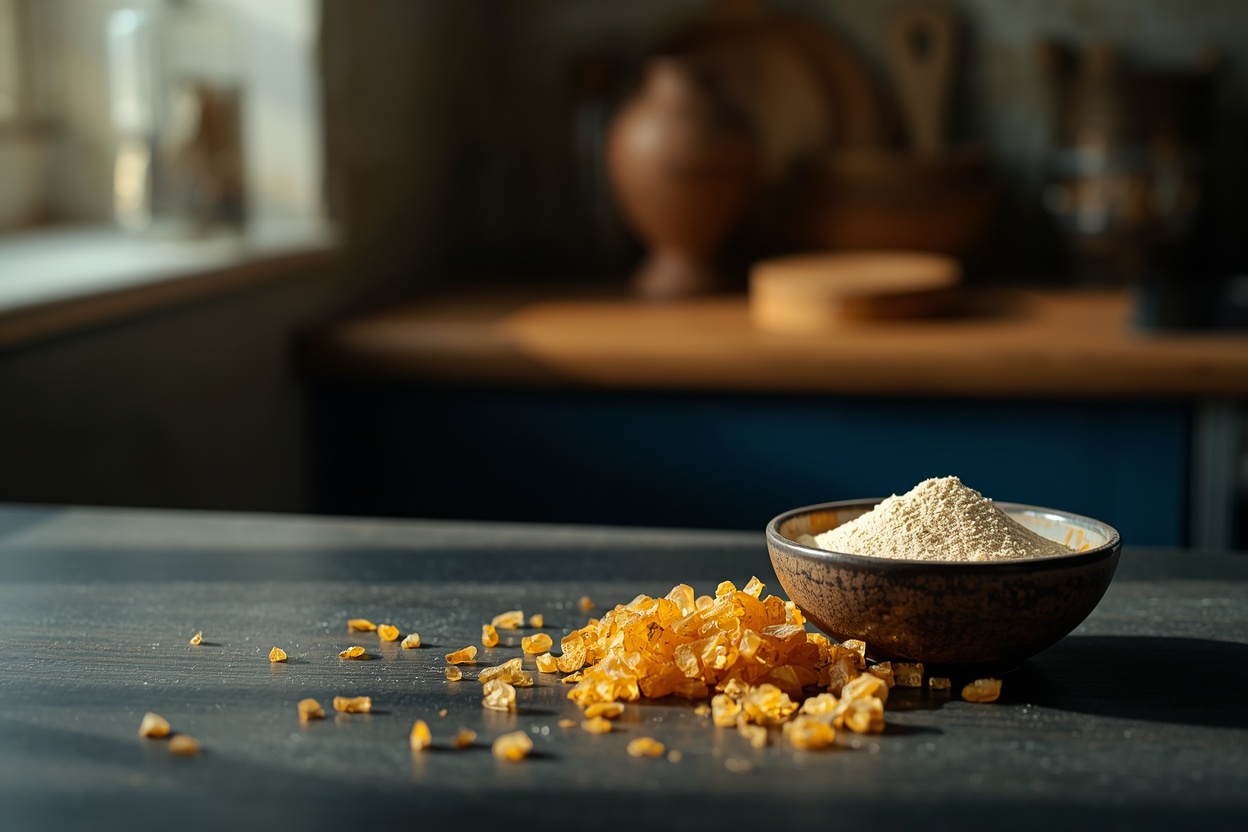
From frankincense resin to a joint extract
Boswellia serrata is an Indian tree. Its resin, better known as frankincense, has been used in Ayurvedic medicine for centuries. The active compounds inside are boswellic acids. The most studied one is AKBA.
AKBA blocks an enzyme called 5-lipoxygenase, or 5-LOX. That enzyme produces leukotrienes, inflammatory molecules that drive joint swelling. Common painkillers like ibuprofen work on a different pathway, COX. A separate pathway explains two things: boswellia’s gentler stomach profile, and why it pairs logically with other supplements instead of duplicating them.
The trial record
Kimmatkar 2003, 30 patients, crossover design. Eight weeks on boswellia extract versus placebo, then switched. Pain index fell from 2.7 to 0.26 on treatment, with better knee flexion and longer walking distance (p<0.001). X-rays showed no structural change. Only minor stomach complaints appeared.
Sengupta 2008, 75 patients, 90 days. The dose-finding trial: 100 mg or 250 mg of 5-Loxin, an extract standardized to 30% AKBA, versus placebo. Both doses beat placebo. The 250 mg group improved significantly by day 7, an unusually fast result for a joint supplement.
Sengupta measured something deeper than symptoms. Levels of MMP-3, an enzyme that degrades cartilage, dropped 31.4% in the 100 mg group (p=0.002) and 46.4% in the 250 mg group (p<0.001) in knee joint fluid. A plausible biological fingerprint, not just felt relief.
Vishal 2011, 60 patients, 30 days. Aflapin, a 100 mg synergistic boswellia composition, improved pain and function significantly by day 5. VAS pain fell 37.6% by day 30.
The 2020 meta-analysis and its asterisk. Seven trials, 545 patients: boswellia beat placebo on pain (VAS −8.33 points), stiffness and function. But the reviewers flagged high variability between studies (I² up to 99%), unclear randomization in places, and small samples. Most enriched-extract trials also had industry funding. The direction is consistently positive. The confidence level is moderate.
Newest confirmation, 2024. A multi-center trial of a 30% AKBA extract at 300 or 600 mg daily found pain relief starting day 5, reaching a 45.3% to 61.9% VAS reduction by day 90. Relief persisted 15 days after stopping.
Why standardization decides everything
Plain boswellia resin powder contains boswellic acids in single-digit percentages, and only part of that is AKBA. The extracts that won trials are concentrated: 5-Loxin at 30% AKBA, Aflapin at 20% or more.
| Form used in trials | Daily dose | Result |
|---|---|---|
| Enriched extract, 30% AKBA (5-Loxin) | 100-250 mg | Significant by day 7 at 250 mg; MMP-3 down 46.4% |
| Synergistic composition (Aflapin) | 100 mg | Significant by day 5; VAS −37.6% at day 30 |
| Traditional extract, 40% boswellic acids | 1,000 mg | Kimmatkar 2003: pain index 2.7 to 0.26 |
| Plain resin powder, unstandardized | Unknown AKBA | No direct trial support |
Read any label for two things: a standardization percentage and the milligrams of extract per daily serving. A joint blend that lists boswellia inside a proprietary mix, without either number, is asking for blind trust. The same token-dose trick we documented for MSM applies here: 50 mg of boswellia in a blend is label decoration, not a dose.
Safety, simply
Boswellia’s safety record is one of its strengths. Trials ran blood and urine labs alongside symptom scores, and treatment groups matched placebo. The side effects that occur are mild: stomach upset, nausea, loose stools.
Two cautions matter. First, two case reports document elevated INR in people taking warfarin alongside boswellia. The same caution applies to antiplatelet drugs and NSAIDs, since boswellia may add to their blood-thinning effect. Tell your doctor or pharmacist before combining. Source: Drugs.com Natural Products; PMC8951360.
Second, pregnancy. Boswellia lacks pregnancy safety data and carries traditional concerns about uterine stimulation. Breastfeeding falls in the same category.
The bottom line
Boswellia earns a spot on the short list of joint ingredients worth trying. It works through a distinct pathway, acts within days instead of months, and carries a clean safety record. Buy by the numbers: a standardized extract, 20-30% AKBA, at 100 to 250 mg daily, or a traditional 40% extract at 1,000 mg. Judge results at week 4, not day 4. For the full map of options, see the joint health hub and our guides to glucosamine and curcumin, boswellia’s most logical partner.
Frequently Asked Questions
Does boswellia really work for knee pain?
The trial record is positive. In Sengupta 2008, 75 patients on a standardized extract reported significant pain and function improvement, starting at day 7 on the higher dose. A 2020 meta-analysis of 7 trials with 545 patients found boswellia beat placebo on pain, stiffness and function. The caveats: most trials are small, several used branded extracts with industry funding, and the meta-analysis flagged high variability between studies.
How fast does boswellia work?
Faster than most joint supplements. In Sengupta 2008, the 250 mg dose of a 30% AKBA extract improved pain scores within 7 days. The Aflapin trial (Vishal 2011) saw significant improvement by day 5. A 2024 trial confirmed a day-5 effect at 600 mg daily. Compare that with glucosamine or type 2 collagen, which need 2 to 4 months. Full results still build over 4 to 12 weeks.
What is the right boswellia dose?
It depends on the extract’s strength. Trials used 100 to 250 mg daily of enriched extracts standardized to 20-30% AKBA, or 1,000 mg daily of a traditional 40% boswellic acids extract. A 2020 meta-analysis concluded at least 100 to 250 mg daily for a minimum of 4 weeks. A label listing plain boswellia powder with no standardization percentage gives no way to know the real dose.
What is AKBA and why does it matter?
AKBA is the most active boswellic acid in boswellia resin. It blocks 5-lipoxygenase, an enzyme that produces inflammatory leukotrienes. That pathway is different from the COX pathway that NSAIDs target, which may explain boswellia’s gentler stomach profile. Standardization matters because plain resin contains only single-digit percentages of AKBA. The enriched extracts that won trials are standardized to 20-30%.
Can boswellia interact with my medications?
Yes. Two case reports document elevated INR in people taking warfarin alongside boswellia. Caution also applies to antiplatelet drugs and NSAIDs, since boswellia may add to their blood-thinning effect. Tell your doctor or pharmacist before combining boswellia with any of these. Source: Drugs.com Natural Products; PMC8951360.
What are the side effects of boswellia?
Boswellia is well tolerated. Across trials, safety labs and side effect rates stayed close to placebo. Occasional complaints are mild stomach upset, nausea or loose stools. Pregnant women should avoid boswellia because of a lack of safety data and traditional concerns about uterine stimulation.
Can I take boswellia with turmeric or curcumin?
Yes, and the combination has direct trial support. Haroyan 2018 tested boswellic acid 150 mg plus curcuminoids 350 mg daily for 12 weeks in 201 knee arthritis patients across three arms, with positive results. The pairing makes mechanistic sense: boswellia blocks the 5-LOX pathway while curcumin works mainly through COX-related pathways. No direct interaction between the two is documented.