
Elderberry for immunity: the berry with better marketing than trials
After 50 Strong checked the elderberry literature for this guide. The honest summary fits in one paragraph. A randomized trial of 312 air travelers found elderberry extract shortened the colds people caught on the road and made them milder, though it did not stop anyone from catching them. An older, small flu study found syrup takers recovered about four days sooner. Systematic reviews are unanimous in their caution: the studies are small, short and often industry-linked, and better trials are needed before anyone claims certainty. Elderberry is a plausible, low-risk, preliminary-tier option, sitting below vitamin D for the deficient and zinc lozenges at symptom onset on the evidence ladder. Here is what the trials found, the forms and doses, and the one safety fact about raw berries that every buyer should know.
- Best trial: 312 air travelers, elderberry reduced cold duration and severity; no prevention effect. Source: Tiralongo et al., 2016.
- Older signal: a small flu study found recovery about four days sooner on elderberry syrup; small, dated, unreplicated.
- The review verdict: systematic reviews call the evidence small and insufficient; more trials needed before firm conclusions.
- Safety note: commercial products are safe; raw or unripe berries, and the plant’s leaves and bark, carry cyanide-releasing compounds and must never be eaten.
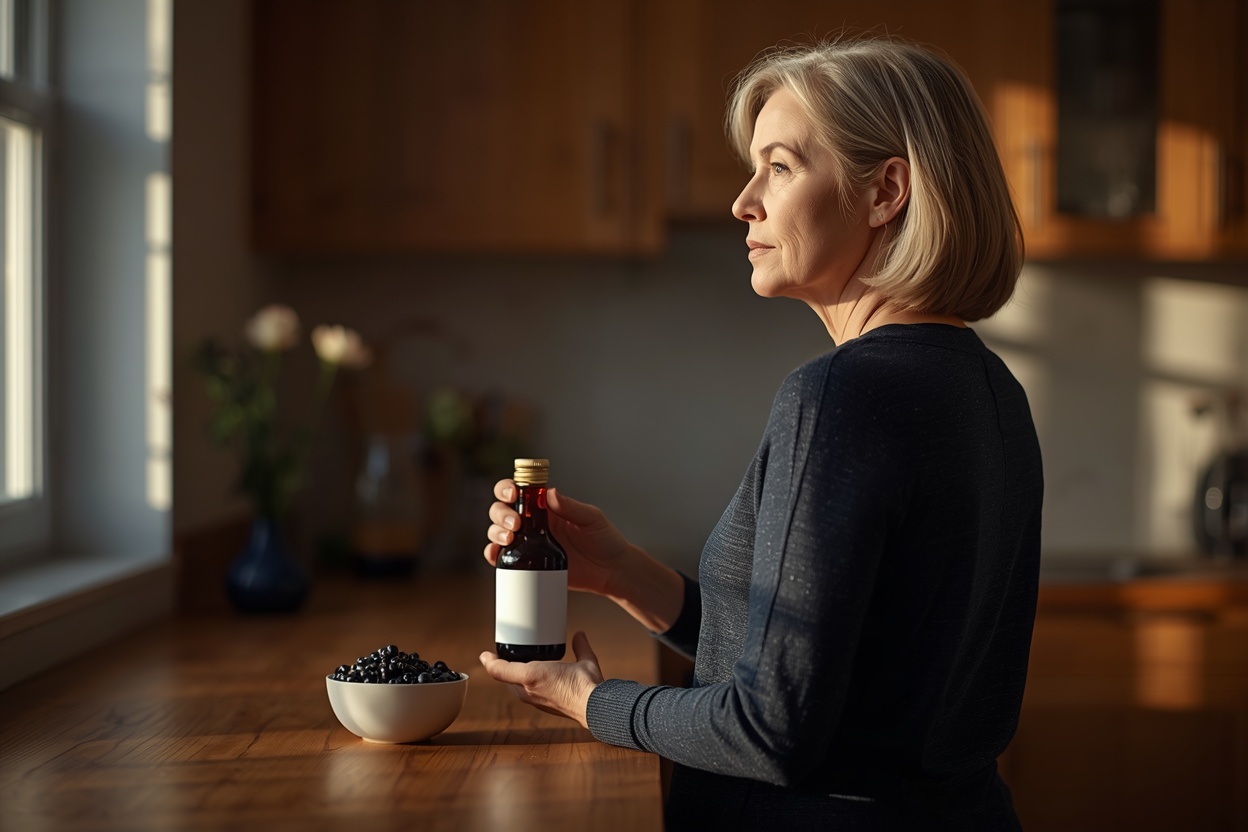
What elderberry is
Elderberry is the dark berry of Sambucus nigra, the European black elder, used in traditional medicine across the continent for centuries and commercialized in the modern era most famously as Sambucol syrup. The berries carry anthocyanins, the deep-purple flavonoids responsible for their color and most of their antioxidant reputation, along with vitamin C and a set of immune-modulating compounds that laboratory work has poked at for decades. The traditional pedigree is real, the laboratory plausibility is real, and the distance between both and solid human trial evidence is where this guide does its work.
What the trials actually found
The largest modern trial randomized 312 long-haul air travelers, people deliberately exposed to the crowding and dryness that breed colds, to standardized elderberry extract or placebo from ten days before travel until five days after. The result: no difference in how many people caught colds, but meaningful differences in the colds themselves, shorter duration and lower severity scores in the elderberry group. Air travel, in other words, shortened the illness rather than blocking it. Source: Tiralongo et al., 2016; PMID 26937478.
The flu data are older and smaller. A randomized trial of sixty people with confirmed influenza found those taking elderberry syrup recovered an average of about four days sooner than the placebo group, a striking result in a strikingly small sample; an earlier outbreak study had pointed the same direction. Lozenge and extract trials since have pointed the same direction without adding certainty. The reviews, which exist precisely to weigh this kind of literature, converge on the same sentence: a meta-analysis pooled only 180 participants, and an independent government risk-of-bias assessment rated that review high risk of bias, while a later systematic review concluded the evidence remains uncertain because the studies are small. Promising, small, insufficient. Sources: Zakay-Rones et al., 2004; Zakay-Rones et al., 1995; Hawkins et al., 2019; Wieland et al., 2021.
Dose and forms
| Form | Studied amount | Notes |
|---|---|---|
| Standardized extract capsules | Roughly 600 to 900 mg per day, started before and during exposure | The form in the largest trial; the low-sugar option |
| Syrup | 15 mL several times daily while symptomatic | The traditional studied form; carries meaningful sugar per dose |
| Lozenges | 175 mg of standardized extract, four times daily | One older trial; not the mainstream format |
| Gummies and unstandardized products | Varies, unstated | Cannot be compared to any trial; the format is a decoration on a guess |
The diversity of studied forms is itself part of the evidence problem: capsules, syrups and lozenges at different concentrations mean there is no single elderberry dose the literature agrees on. What serious products share is standardization to flavonoid or anthocyanin content, stated on the label in an amount. That standardization line is the difference between an extract and a folk remedy.
Safety, including the fact everyone should know
Commercial elderberry products have a clean record. The trials report few side effects, mostly mild digestive ones, and decades of syrup sales have produced no serious signal. The one safety fact that matters lives outside the bottle: the raw plant is genuinely toxic. Unripe berries, and the leaves, bark and roots of the elder shrub, contain cyanogenic glycosides, compounds that release cyanide during digestion, and eating them causes nausea, vomiting and, in sufficient amounts, real poisoning. Heat and proper extraction destroy these compounds, which is exactly what commercial processing does and exactly why the syrup on the shelf is safe while the berries off the bush are not. Do not forage and do not DIY from fresh plant material. This is the rare case where the processing is the safety feature.
The routine cautions are short. Elderberry stimulates immune activity in laboratory work, which is why anyone with an autoimmune condition or on immunosuppressants should clear it first. Syrup sugar belongs in the blood-sugar ledger. Pregnancy data do not exist, and the default is avoid. None of these are alarms. They are the ordinary price of admission for an immune botanical.
Who should skip elderberry
Skip it with autoimmune disease or immunosuppressant medication, per the immune-stimulation logic. Skip it in pregnancy and breastfeeding, per absent data. Skip syrups as a daily habit if blood sugar matters, or switch to standardized capsules. Skip any product that cannot state its standardization, since an unlabeled extract borrows the reputation without the verification. Skip DIY preparations from raw plant material, always. And skip treating elderberry as influenza treatment: faster recovery in small trials is not a substitute for antivirals when you are high-risk, and it is no argument against the flu shot, which prevents the thing elderberry merely softens.
Elderberry versus the alternatives
On the cold-and-flu shelf, the ordering is honest. Vitamin D, corrected for deficiency, reduces respiratory infections across a season, and the test predicts the benefit. Zinc lozenges carry the early-start protocol with a real signal in the positive analyses. Vitamin C shortens colds modestly without preventing them. Elderberry joins vitamin C in the symptom-shortening tier with a thinner and smaller trial base, plus a more colorful marketing history. And blend products like the one in our TonicGreens review cannot even be dosed against any of it. Our immune supplements guide orders the whole cabinet.
What to look for on the label
- Standardized extract, with flavonoid or anthocyanin content stated in milligrams.
- A studied form for the use case: capsules for the travel protocol, syrup for the traditional one, with the sugar counted.
- Sambucus nigra as the named species, since that is what the trials used.
- No prevention promises on the packaging, because the prevention claim is the one the trials explicitly did not support.
Frequently Asked Questions
Does elderberry really boost the immune system?
The honest summary: small trials, encouraging direction, evidence thinner than the shelf implies. In a randomized trial of 312 air travelers, elderberry extract reduced the duration and severity of colds that participants caught while traveling, though it did not prevent them from catching colds in the first place. An older, small flu study found people taking elderberry syrup recovered about four days sooner than those on placebo. Systematic reviews of the whole literature are consistent in their caution: the studies are small and short, often industry-linked, and more and better trials are needed before firm conclusions. Elderberry sits in the plausible-but-preliminary tier, below vitamin D for the deficient and zinc lozenges at symptom onset. Sources: Tiralongo et al., 2016; Hawkins et al., 2019, systematic review.
Can elderberry prevent colds and flu?
Prevention is the claim the trials do not support. The largest modern trial, in air travelers, found no reduction in how many participants caught colds; what improved was how long the colds lasted and how severe they felt. The flu data are older and smaller, showing faster recovery for people already sick, not fewer people getting sick. That pattern should set honest expectations: if elderberry helps, it helps as a symptom-shortener for an illness that has already started, taken early, and even that effect carries a low-certainty label from the reviewers. Prevention marketing outruns the data by a wide margin, and anyone telling you a gummy or syrup shields you from flu season is selling beyond the trials.
What dose of elderberry do studies use?
The studies used standardized extracts rather than kitchen preparations. The air-traveler trial used capsules of standardized black elderberry extract at roughly 600 to 900 mg per day, started before travel and continued through the trip. The older flu studies used commercial syrup preparations, typically 15 milliliters several times daily while symptoms lasted, and one trial of lozenges used a standardized extract at 175 milligrams four times a day. That spread, capsules, syrups and lozenges at different concentrations, is part of the evidence problem: there is no single standardized dose the literature agrees on. What the products share is standardization to the berry’s flavonoid content, which is the serious-product marker in this category.
Is elderberry safe?
Commercial elderberry products are safe for most people, with a clean record in the trials and mild side effects, mostly digestive, in a small share of users. One distinction is absolute, and it belongs to the kitchen rather than the bottle: raw or unripe elderberries, along with the leaves, bark and roots of the plant, contain cyanogenic glycosides, compounds that release cyanide when metabolized, and eating them causes nausea, vomiting and worse. Proper processing, heating and extraction, destroys these compounds, which is why commercial syrups, capsules and gummies are safe while foraged raw berries are not. Do not make your own elderberry preparations from fresh plant material unless you know exactly what you are doing. Sources: toxicology references; trial safety data.
Who should not take elderberry?
Skip elderberry with an autoimmune condition or on immunosuppressant medication, because elderberry stimulates immune activity in laboratory work and pushing an already-activated immune system is a direction nobody should choose unsupervised. Skip it in pregnancy and breastfeeding, where the data simply do not exist and the standard advice is to avoid. Skip syrup forms, or at least count them, if you manage blood sugar, since syrups carry meaningful sugar per dose. Skip making your own from raw berries, per the cyanide chemistry above. And skip treating elderberry as flu treatment: faster recovery in small trials is not a substitute for antivirals when you are high-risk, or for the flu shot that reduces the risk of the thing itself.
Elderberry syrup, gummies or capsules: which is better?
Form matters less than standardization and sugar. Syrups were the original studied form and carry the most tradition, but also the most sugar, sometimes more per dose than a soda serving, which matters for daily use after 50. Capsules of standardized extract, the form in the largest modern trial, skip the sugar and make the berry’s flavonoid content easier to verify on a label. Gummies are the least serious format: candy-adjacent dosing, unstated standardizations and the same sugar problem as syrup. The label question that outranks all three: is the product standardized to flavonoid or anthocyanin content, in a stated amount? If a bottle cannot answer that, the format is a decoration on a guess.