
Knee pain after 50: causes, what actually helps, and when to see a doctor
Knees carry you through roughly a million steps a year, and after 50 they start filing complaints. Most of the time the cause is mechanical and manageable. Sometimes it is a warning worth acting on fast. Here is how to tell normal wear from real problems, and what the evidence says actually helps.
- Most common cause: osteoarthritis, affecting over 32 million US adults (CDC).
- Not inevitable: lifetime risk of symptomatic knee arthritis is 13.8%, and the CDC states plainly it is not a normal part of aging.
- Best-evidenced fixes: exercise and weight loss, both strongly recommended by the American College of Rheumatology.
- Fast facts: every pound lost removes 4 pounds of load per step.
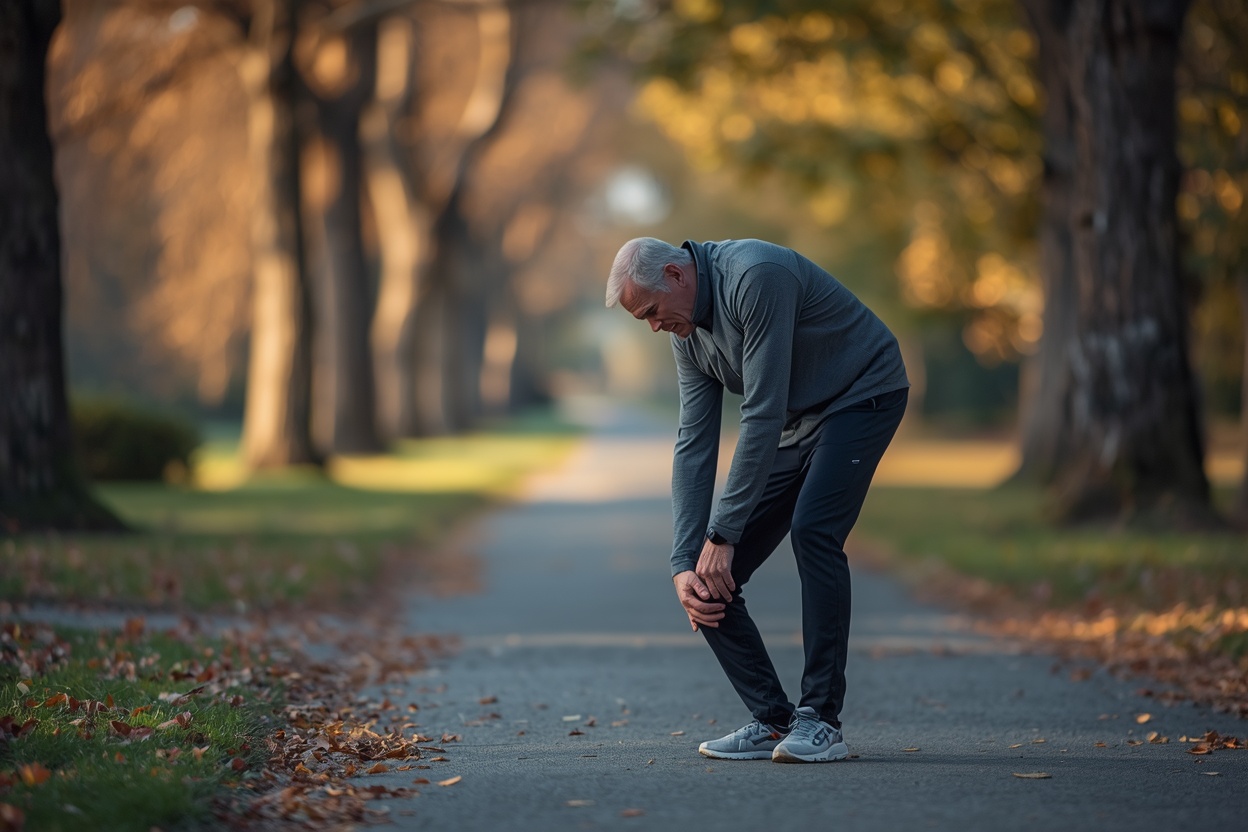
What is normal wear, and what is not
Some soreness after an unusual hike or a long gardening day is normal at any age. Cartilage thins with time, and recovery slows. That is background noise.
Persistent patterns are different. Pain that shows up most days, stiffness lasting over 30 minutes each morning, swelling after ordinary activity, or a knee that gives way: those are signals, not aging. The median age of knee arthritis diagnosis in the US is 55 (Losina et al., 2013), which means the decade after 50 is exactly when vague aches deserve a name. Women carry higher risk after 50 than men, and weight shifts the odds sharply.
The usual suspects
| Cause | Typical pattern | First move |
|---|---|---|
| Osteoarthritis | Achy pain with use, brief morning stiffness, gradual onset over months | Exercise, weight management, topical relief; see our joint health hub |
| Meniscus tear | Sharp pain after a twist, catching or locking sensation | Medical exam; imaging if locking |
| Bursitis | Localized tenderness and swelling, often at the kneecap or inner knee | Rest from the trigger, ice, doctor if persistent |
| Tendon irritation | Pain below or above the kneecap, worse with stairs | Load management, targeted strengthening |
| Gout | Sudden intense pain, red hot swollen joint, often at night | Doctor visit; blood uric acid test |
| Referred hip pain | Knee aches but the knee exam looks fine | Mention hip symptoms to your doctor |
Only an examination separates these reliably. Self-diagnosis by symptom lists works poorly for knees, because several conditions share the same ache.
Red flags: when pain means a doctor visit
Get urgent care if the knee is deformed, you heard a pop at the moment of injury, you cannot bear weight, pain is intense, or the knee swelled suddenly (Mayo Clinic criteria).
Book a prompt appointment for a knee that stays badly swollen, red, warm and tender, or if fever accompanies the pain. A hot, swollen knee with fever can signal infection, and that is a same-week conversation, not a supplement question.
Also worth a visit: ongoing pain that disturbs your sleep or daily tasks, even without drama. Chronic pain is easier to redirect early.
What actually helps, ranked by evidence
1. Exercise, the strongest recommendation in the 2019 ACR guideline. Both land-based and aquatic exercise earn the top grade. Cochrane evidence shows exercise reduces pain and improves function in knee osteoarthritis. Start supervised if possible, scale impact down, keep frequency up: walking, cycling, swimming, and strength work for the thighs. Resting a painful knee into weakness is the most common self-treatment mistake.
2. Weight loss, the second strong recommendation. The Messier 2005 trial measured it directly: each pound of weight lost removes 4 pounds of load from the knee with every step. Ten pounds down means 40 fewer pounds per step, thousands of times a day. Benefits appear from a 5% weight loss and grow from there.
3. Topical NSAID gels. Also strongly recommended for knee arthritis by the ACR, with a Cochrane review behind the class. A pharmacist can point you to the right one.
4. Tai chi and physical therapy. Tai chi carries a strong recommendation; balance work helps confidence on stairs. A physical therapist can fix gait habits that load the knee unevenly.
5. Heat and cold. Cold after activity for swelling, heat before movement for stiffness. Cheap, safe, underrated.
Where supplements fit, honestly
Supplements sit in the supporting cast, not the lead role. A few ingredients have real trial data with modest effects: glucosamine and chondroitin have been tested in large trials; boswellia extract 5-Loxin at 250 mg showed measurable improvement by day 7 in one 75-patient trial (Sengupta et al., 2008); type 2 collagen (UC-II) beat placebo at 40 mg daily over 180 days (Lugo et al., 2016). None rebuilds cartilage. None replaces the five items above. If you add one, give it a fair 8 to 12 week trial and keep what measurably helps.
The bottom line
Knee pain after 50 is common, usually mechanical, and mostly manageable without drama. Name the cause before treating it. Build the foundation from movement and load, use topical relief when needed, treat supplements as optional extras with real but modest evidence, and never sit on red-flag symptoms. Your knees have decades of work left in them.
Frequently Asked Questions
Is knee pain normal after 50?
Common, yes. Inevitable, no. The lifetime risk of symptomatic knee osteoarthritis is 13.8% (Losina et al., 2013). The CDC stresses that osteoarthritis is not a regular part of aging. Occasional aches after unusual effort are normal. Persistent pain, swelling or morning stiffness over 30 minutes deserves a medical look.
What is the most common cause of knee pain after 50?
Osteoarthritis leads by a wide margin. It affects over 32 million US adults (CDC), and the knee is its favorite target. Other common causes after 50 include meniscus tears, which can happen from simple twists, bursitis, tendon irritation and gout. Pain higher up, in the hip, can also refer down to the knee. Only an exam separates these reliably.
When does knee pain need a doctor urgently?
Urgent care signs per Mayo Clinic: a deformed knee, a popping sound at the moment of injury, inability to bear weight, intense pain, or sudden major swelling. Make a prompt appointment for a knee that is badly swollen, red, warm and tender, or if you have fever alongside the pain. Ongoing pain that disturbs sleep or daily tasks also deserves evaluation.
What actually helps knee arthritis pain?
The strongest evidence is not in a bottle. The 2019 American College of Rheumatology guideline strongly recommends exercise, both land-based and aquatic, and weight loss for anyone carrying extra pounds. Every pound lost removes 4 pounds of load per step (Messier et al., 2005). Topical NSAID gels also carry a strong recommendation. Supplements can be a modest add-on, never the foundation.
Do knee supplements work after 50?
Some have real trial data, with modest effects. Glucosamine and chondroitin have been studied in large trials. Boswellia extract 5-Loxin at 250 mg showed measurable improvement by day 7 in one 75-patient trial (Sengupta et al., 2008). Type 2 collagen (UC-II) beat placebo at 40 mg daily over 180 days (Lugo et al., 2016). None rebuilds cartilage or replaces exercise and weight management. Details sit in our ingredient guides.
Should I rest a painful knee or keep moving?
Keep moving, with sense. Cochrane evidence shows exercise reduces pain and improves function in knee osteoarthritis. Prolonged rest weakens the muscles that stabilize the knee and typically worsens symptoms over time. Scale impact down, not movement: walking, cycling, swimming and strength work beat the couch.